
Differences in Learning Motivation and Search Activity among Russian Schoolchildren Studying in Different Educational Systems
Received: 06/03/2025
Accepted: 09/20/2025
DOI: 10.11621/ nicep.2025.0510
To cite this article:
Saul, P.S., Sidneva, A.N. (2025). Differences in Learning Motivation and Search Activity among Russian Schoolchildren Studying in Different Educational Systems. New Ideas in Child and Educational Psychology, 3-4 (5), 89-110. DOI: 10.11621/ nicep.2025.0510
Background. Research indicates significant differences in the characteristics of learning motivation among children educated within different educational systems. However, the contribution to learning motivation made by systems based on fundamentally different philosophical foundations has remained unexamined. Specifically, this applies to the traditional system (TS), which is based on associationist theory of thinking; the system of D.B. Elkonin - V.V. Davydov (developmental education, DE), grounded in the principles of the dialectical theory; and the Waldorf pedagogy system (WP), which relies on R. Steiner's anthroposophical theory. Existing comparisons have been limited primarily to analysis of the reasons why children learn, while failing to investigate the characteristics of their responses in situations of uncertainty. Specifically, the orientation towards search behavior and the orientation towards passive avoidance, which may also vary across different systems, have not been sufficiently studied.
Objective. To examine differences in the characteristics of learning motivation and search activity among students within three distinct educational systems (TS, DE, and WP).
Design. This comparative empirical study examined differences in learning motivation and search activity among students across three educational systems. The study sample comprised 53 students (45% male; mean age = 10.3 years, SD = 1.16) recruited from three schools in Moscow and the Moscow Region. The sample distribution across educational systems was as follows: 32% of participants were enrolled in a traditional system (TS) school, 33% in a school implementing the Elkonin–Davydov developmental education system (DE), and 35% in a school employing the Waldorf Pedagogy (WP) approach.
Results. Students within the WP system demonstrated significantly higher levels of intrinsic cognitive motivation and identified motivation compared to their peers from the other two educational systems. Furthermore, students in both the DE and WP systems exhibited a significantly higher degree of search activity than those in the traditional system (TS). Finally, a negative correlation was identified between the level of extrinsic motivation and search activity.
Conclusion. The findings suggest that person-centered learning systems foster the development of more productive types of learning motivation (including intrinsic and identified regulation motivation) and more adaptive responses to uncertainty compared to students from other systems. Furthermore, the system, based on the principles of the dialectical theory of thinking (i.e. Elkonin-Davydov system), appears to be more conducive to the development of active search behaviors where there exists a degree of uncertainty in circumstance when compared to the traditional system. Moreover, the study also confirms the hypothesis that students who are primarily driven by external motivating factors (external regulation) engage in search activity significantly less often under circumstances of uncertainty, preferring passive avoidance instead.
Highlights- Children enrolled in different educational systems exhibit distinct profiles in terms of their learning motivation and search activity.
- Students within the Waldorf pedagogy system are significantly more likely to be motivated by an intrinsic interest in learning new things and by a sense of personal choice (identified regulation) compared to their peers in other systems.
- No statistically significant differences in learning motivation were found between students from the traditional system and those from the developmental education system; this null result, however, may be attributable to the limited sample size.
- Students from both the developmental education (Elkonin-Davydov) system and the Waldorf pedagogy system demonstrate a significantly higher level of search activity in uncertain situations than those from the traditional system.
- A higher frequency of learning driven by external reasons correlates with a lower frequency of search activity under situations of uncertainty.
Актуальность. Исследования показывают наличие существенных различий в особенностях учебной мотивации детей, обучающихся в разных образовательных системах. Однако до настоящего времени не оценивался вклад в учебную мотивацию систем обучения, опирающиеся на принципиально разные философские основания, в частности, традиционной системы (далее – ТО), в основе которой лежит ассоцианистская теория мышления, системы Д.Б. Эльконина – В.В. Давыдова (далее – РО), в основе которой лежат принципы диалектической теории мышления, и системы Вальфдорской педагогики (далее ВП), опирающейся на антропософскую теорию Р. Штайнера. Существующие сравнения также были ограничены в основном анализом причин, по которым дети учатся, но не изучались особенности их реагирования в ситуации неопределенности, в частности, установка на поиск (далее – поисковое поведение) и установка на пассивное избегание (далее – пассивное избегание), которые также могут различаться в разных системах.
Цель. В исследовании анализируются различия в особенностях учебной мотивации и поисковой активности у детей, обучающихся в трех разных образовательных системах (ТО, РО и ВП).
Дизайн. Участниками исследования стали 53 учащихся (из них 45% мальчиков, ср. возраст по выборке = 10.3, ст. отклонение = 1.16) трех школ Москвы и Московской области, одна из которых использует систему традиционного обучения (32% детей), другая – систему развивающего обучения Д.Б. Эльконина-В.В. Давыдова (33%) и третья – систему Вальдорфской педагогики (35%).
Результаты. Учащиеся, обучающиеся в рамках ВП, имеют значимо более высокую внутреннюю познавательную мотивацию и идентифицированную мотивацию, чем дети из двух других образовательных систем. Учащиеся, обучающиеся в рамках РО и ВП, демонстрируют значимо более высокий уровень поисковой активности, чем в традиционном обучении. Наконец, была обнаружена отрицательная взаимосвязь между уровнем экстернальной мотивации и поисковой активности.
Вывод. Результаты исследования позволяют предположить, что личностно-ориентированные системы обучения способствуют развитию более продуктивных типов учебной мотивации (внутренней и идентифицированной) и типов реагирования в ситуации неопределенности по сравнению с детьми, обучающимися в других системах. При этом система, построенная на принципах диалектической теории мышления, способствует лучшему развитию активных поисковых действий в ситуации неопределенности в сравнении с системой традиционного обучения. Ожидаемым результатом является также то, что дети, обучающихся, главным образом, по внешним причинам (экстернальная мотивация), значимо реже в ситуациях неопределенности проявляют поисковую активность, предпочитая пассивное избегание.
Ключевые положения- Дети, обучающиеся в разных образовательных системах, отличаются по особенностям учебной мотивации и поисковой активности.
- При обучении в рамках образовательной системы Вальдорфской педагогики значимо чаще дети учатся, поскольку им интересно узнавать новое и поскольку они считают обучение своим собственным выбором.
- Не обнаружено различий в учебной мотивации между детьми из традиционной системы и системы развивающего обучения, что, однако, может быть связано с небольшим объемом выборки.
- Учащиеся, обучающиеся в рамках систем развивающего обучения и Вальдорфской педагогики, демонстрируют значимо более высокий уровень поисковой активности, чем в традиционном обучении.
- Чем чаще дети учатся по внешним причинам, тем реже они проявляют поисковую активность в ситуациях неопределенности.
Antecedentes. Las investigaciones muestran que existen diferencias significativas en las características de la motivación académica de los niños que estudian en diferentes sistemas educativos. Sin embargo, hasta la fecha no se ha evaluado la contribución a la motivación académica de sistemas de enseñanza basados en fundamentos filosóficos fundamentalmente diferentes, en particular, el sistema tradicional (en adelante, ST), que se basa en la teoría asociacionista del pensamiento; el sistema de D.B. Elkonin — V.V. Davydov (en adelante, SD), que se basa en los principios de la teoría dialéctica del pensamiento; y el sistema de pedagogía Waldorf (en adelante, PW), que se basa en la teoría antroposófica de R. Steiner. Las comparaciones existentes también se han limitado principalmente al análisis de las razones por las que los niños estudian, pero no se han investigado las características de su respuesta en situaciones de incertidumbre, en particular, la disposición a la búsqueda (en adelante, comportamiento de búsqueda) y la disposición a la evitación pasiva (en adelante, evitación pasiva), que también pueden diferir entre los distintos sistemas.
Objetivo. El estudio analiza las diferencias en las características de la motivación académica y la actividad de búsqueda en niños que estudian en tres sistemas educativos diferentes (ST, SD y PW).
Diseño. Los participantes del estudio fueron 53 estudiantes (45% niños, edad media = 10.3, desviación estándar = 1.16) de tres escuelas de Moscú y la región de Moscú, una de las cuales utiliza el sistema de enseñanza tradicional (32% de los niños), otra el sistema de enseñanza desarrolladora de D.B. Elkonin-V.V. Davydov (33%) y la tercera el sistema de pedagogía Waldorf (35%).
Resultados. Los estudiantes que cursan estudios en el marco de la PW tienen una motivación cognitiva interna y una motivación identificada significativamente más altas que los niños de los otros dos sistemas educativos. Los estudiantes que cursan estudios en el marco del SD y la PW demuestran un nivel de actividad de búsqueda significativamente mayor que en la enseñanza tradicional. Por último, se encontró una relación negativa entre el nivel de motivación externa y la actividad de búsqueda.
Conclusión. Los resultados del estudio sugieren que los sistemas de aprendizaje centrados en la persona favorecen el desarrollo de tipos de motivación académica más productivos (interna e identificada) y tipos de respuesta en situaciones de incertidumbre en comparación con los niños que estudian en otros sistemas. Al mismo tiempo, el sistema basado en los principios de la teoría dialéctica del pensamiento favorece un mejor desarrollo de acciones de búsqueda activa en situaciones de incertidumbre en comparación con el sistema de enseñanza tradicional. También es un resultado esperado que los niños que estudian principalmente por razones externas (motivación externa) muestran con menos frecuencia actividad de búsqueda en situaciones de incertidumbre, prefiriendo la evitación pasiva.
Destacados- Los niños que estudian en diferentes sistemas educativos se diferencian en las características de su motivación académica y actividad de búsqueda.
- En el sistema educativo de pedagogía Waldorf, los niños estudian con una significativamente mayor frecuencia porque les interesa aprender cosas nuevas y porque es su propia elección.
- No se encontraron diferencias en la motivación académica entre los niños del sistema tradicional y del sistema de enseñanza desarrolladora, lo que, sin embargo, puede deberse al pequeño tamaño de la muestra.
- Los estudiantes que cursan estudios en el sistema de enseñanza desarrolladora y en la pedagogía Waldorf demuestran un nivel de actividad de búsqueda significativamente mayor que en la enseñanza tradicional.
- Cuanto más frecuentemente estudian los niños por razones externas, menos muestran actividad de búsqueda en situaciones de incertidumbre.
Origines. Avec l’utilisation généralisée des dispositifs numériques, l’activité en ligne est devenue une partie importante de la vie quotidienne des adolescents. Selon l’Organisation mondiale de la santé (2022), plus de 11 % des adolescents présentent des signes d’utilisation problématique des réseaux sociaux, éprouvent des difficultés à contrôler leur comportement et subissent des conséquences négatives en conséquence. La régulation des émotions joue un rôle essentiel dans la formation des attitudes des adolescents envers les réseaux sociaux. La capacité à réguler les émotions peut à la fois favoriser une interaction saine avec les plateformes numériques et réduire le risque de comportements problématiques. L’étude de la relation entre des stratégies spécifiques de régulation des émotions et l’utilisation problématique des réseaux sociaux permettra d’approfondir la compréhension des mécanismes associés à la formation de ce type de comportements.
Objectif. L’étude analyse les différences dans les caractéristiques de la motivation scolaire et de l’activité de recherche chez les enfants scolarisés dans trois systèmes éducatifs différents (ST, DE et PW).
Conception. Les participants à l’étude étaient 53 élèves (dont 45 % de garçons, âge moyen = 10,3 ; écart-type = 1,16) de trois écoles de Moscou et de la région de Moscou : l’une utilisant le système d’enseignement traditionnel (32 % des enfants), la deuxième – le système d’enseignement développé par Elkonine-Davydov (33 %), et la troisième – le système de pédagogie Waldorf (35 %).
Résultats. Les élèves scolarisés dans le cadre de la PW présentent une motivation cognitive intrinsèque et une motivation identifiée significativement plus élevées que les enfants des deux autres systèmes éducatifs. Les élèves inscrits dans les systèmes DE et PW démontrent un niveau d’activité de recherche significativement plus élevé que dans le système traditionnel. Enfin, une corrélation négative a été trouvée entre le niveau de motivation externe et l’activité de recherche.
Conclusion. Les résultats de l’étude suggèrent que les systèmes éducatifs centrés sur l’élève favorisent le développement de types de motivation scolaire plus productifs (intrinsèque et identifiée), ainsi que de modes de réaction plus efficaces en situation d’incertitude, comparés aux enfants issus d’autres systèmes. De plus, le système fondé sur les principes de la théorie dialectique de la pensée favorise davantage le développement d’actions de recherche actives en situation d’incertitude, par rapport au système d’enseignement traditionnel. Il était également attendu que les enfants motivés principalement par des raisons externes (motivation extrinsèque) manifestent significativement moins d’activité de recherche dans des situations d’incertitude, préférant l’évitement passif.
Points principaux- Les enfants scolarisés dans différents systèmes éducatifs diffèrent par leurs caractéristiques de motivation scolaire et d’activité de recherche.
- Dans le cadre du système de pédagogie Waldorf, les enfants apprennent significativement plus souvent parce qu’ils trouvent intéressant de découvrir de nouvelles choses et parce que c’est leur propre choix.
- Aucune différence de motivation scolaire n’a été trouvée entre les enfants du système traditionnel et ceux du système d’enseignement développé, ce qui pourrait toutefois être lié à la taille réduite de l’échantillon.
- Les élèves des systèmes DE et PW présentent un niveau d’activité de recherche significativement plus élevé que dans le système traditionnel.
- Plus les enfants apprennent pour des raisons externes, moins ils manifestent d’activité de recherche dans des situations d’incertitude.
Introduction
By educational system, we mean a set of educational principles and strategies that relate to goals, content, methods, and instructional practices, as well as grading systems (Sidneva et al., 2020). Currently, the most prevalent system in Russia is the traditional school system, whose primary goal is for students to acquire a fundamental understanding of the world. This system is based on the principles of traditional didactics established by J.A. Comenius (Comenius, 2022), namely, the principles of visuality, accessibility, conscious learning, continuity, among others.
Regarding alternative educational systems, their presence within the Russian educational landscape is diminishing. This trend may be linked to a scarcity of research investigating the impact of existing educational systems on children's psychological development – a gap that the present study aims to address. This work compares three systems founded on fundamentally different philosophical foundations: the traditional system (TE) and two alternative systems – the Elkonin-Davydov developmental education system (DE) and Waldorf pedagogy (WP). These systems differ both in their curricular content and in their approaches to student assessment.
The traditional educational system is characteristic of a majority of Russian schools and is endorsed at the state level. Among its key principles are those established as early as the 17th century by the founder of scientific pedagogy, J.A. Comenius (2022): the principle of continuity (building new knowledge upon previous material), accessibility (ensuring the content is age-appropriate), conscious learning (comprehension of the material as opposed to rote memorization), and visuality (maximizing the engagement of the child's senses). As V.V. Davydov (1974) demonstrated, these principles are underpinned by an empirical-rational theory of thinking, which is rooted in a dialectical-materialist view of the cognitive process. From this perspective, cognition begins with the direct perception of objects through the senses; common features of these objects are identified and, through repeated reinforcement, become fixed as general representations and subsequently as concepts (ibid.). This type of thinking is characteristic of everyday, practical human experience; it is classificatory and cataloguing in nature.
Accordingly, the traditional system of education relies on the formation of so-called empirical concepts in students, which may lack the underlying essence of a subject matter (i.e., why something is structured in a particular way). The quality of learning within the traditional system is assessed through grades assigned by the teacher. The effectiveness of this paradigm is questionable, as numerous children experience a fear of poor grades, largely due to their poor differentiation, subjectivity, and the public and comparative nature of assessment (Gordeeva et al., 2021). Simultaneously, students may fixate on outcomes; to obtain good grades becomes their primary motivator (Gordeeva, 2010; Gordeeva et al., 2021; Umnyashova, 2006). This focus on external approval from parents, teachers, and peers, combined with the absence of a foundational theoretical conceptualization within a curricula, comes to overshadow the students’ intrinsic interest in new information and the enjoyment derived from the very process of learning.
The Elkonin-Davydov developmental education system is based on L.S. Vygotsky's idea of the leading role of instruction in mental development (Vygotsky, 2017) as well as Davydov’s theory of developmental education (Davydov, 1996). Compared to the traditional educational system, DE involves changes in the goals and content of learning, as along with innovative methods, different forms of learning, and a different grading system (Gordeeva et al., 2018). Curriculum in this educational system consists of theoretical concepts, which involve the genesis of the concept being learned (Davydov, 1996). V.V. Davydov constructed his system based on fundamentally different principles. For instance, he proposed replacing the principle of continuity with the principle of the connection between qualitatively different stages of learning—both in terms of content and the methods of presenting it to children (e.g., the task of primary school is to introduce children to fundamentally different, scientific concepts that restructure their preschool experience) (Davydov, 1974). From V.V. Davydov's perspective, the principle of accessibility should be replaced by the principle of developmental instruction where teaching focuses on a child's zone of proximal development (Vygotsky, 2017). The principle of conscious learning is contrasted with the principle of activity—where children solve specific tasks in relation to the transformation of objects (e.g., modifying words by number, case and so on.). This approach leads to the reconstruction of an objects essential properties (e.g., the functions of word parts), which then forms the basis of the concept (Davydov, 1974). In the Elkonin-Davydov system, the principle of visuality is replaced by the principle of objectivity—a precise indication of the actions that must be performed with objects to, on the one hand, reveal the content of the future concept, and on the other, to represent this content in the form of models reflecting not the visual, but the essential properties. This system implies a change in the content of education that significantly expands the incorporation of theoretical knowledge and the corresponding general methods of action. This change is assumed to lead to the formation of theoretical thinking.
Another crucial aspect of the Elkonin-Davydov system is the principle of grade-free assessment: in this approach, the functions of control and assessment are gradually transferred to the student, in contrast to the traditional system where they belong to the teacher. A natural consequence of this principle should be the minimization of a fear of making mistakes, a greater capacity to express one's opinion, and seeking help from teachers (Zukerman, 2001). This fosters the development of self-assessment skills and, thereby, enhances children's focus on the cognitive process itself (Gordeeva et al., 2019; Gordeeva et al., 2021).
Waldorf pedagogy is grounded in the philosophical concepts of R. Steiner, namely anthroposopy, a universal doctrine of the human being (Steiner, 1996). A key principle of the system is the holistic development of the child, understood as the harmonious and balanced formation of their physical, emotional, intellectual, and spiritual and volitional qualities.
The content of education in this system does not fundamentally change from that of traditional system; however, there are several significant alterations in the forms, methods, and means of instruction, as well as in the assessment system. One of the most important principles is the significance of rhythms and repetition of the educational process which is built on a rhythmic organization of the day, week, and year designed to create a sense of security and world order in the child (e.g., core subjects are taught in intensive blocks or epochs lasting 3-4 weeks during the morning hours. Secondly, the curriculum is aligned with the phases of child development described by Steiner through three seven-year cycles, each with its own specific task (motor development up to age 7, development of the emotional and imaginative sphere from 7 to 14 years, and development of abstract thinking from 14 to 21 years). In the primary and middle stages of education, traditional numerical grades and standardized testing are absent. Feedback is provided through detailed narrative reports (descriptions of the student's achievements and areas for growth), which minimizes a competitive environment and orients the child towards intrinsic motivation and personal progress. Thus, Waldorf pedagogy represents an alternative humanistic educational paradigm aimed less at the mere transmission of knowledge and more on the development of the child's personality. Accordingly, this system is classified among person-centered learning technologies (Zagvozdkin, 2002).
Despite the differences in the theoretical foundations of the WP system and the ED system, they share commonalities in the abolition of grading, avoidance of comparing children to one another, thereby avoiding the ranking of individuals according to merits and shortcomings (Valeev, 2006; Kartashova, 2020; Selsfors, 2024).
Academic Motivation Across Different Educational Systems
The theoretical framework for analyzing academic motivation in this study utilizes the E. Deci and R. Ryan's Self-Determination Theory (SDT), selected for its detailed elaboration of academic motivation types. Within SDT, three basic psychological needs are posited as the sources of intrinsic motivation: the need for autonomy, competence, and relatedness (Ryan & Deci, 2000). The need for autonomy is paramount and reflects an individual's striving to feel in full control and be the initiator of their own actions. It is important not to equate autonomy with complete independence from others; the subsequent need for relatedness reflects the importance of acceptance, and support from parents, teachers, and peers in strengthening a student's interest. The need for competence signifies the desire to solve academic tasks correctly and to feel successful in cognitive activities.
According to this approach, academic motivation is divided into extrinsic and intrinsic categories (Ryan & Deci, 2000). Extrinsic motivation has four forms, constituting a continuum. At one end lies amotivation—a state devoid of any incentive to learn. At the other end lies intrinsic motivation. The types of extrinsic motivation are (1) external, (2) introjected, (3) identified, and (4) integrated regulation. The first type occurs when pressure is exerted on the learner externally, for example, by parents or teachers using specific forms of reward and punishment. The second type, introjected regulation, is based on feelings of guilt and shame on one hand, and pride on the other; it is essentially motivation supporting self-esteem. Although the locus of control begins to shift inward in this instance, with the learner, rather than others, serving as the regulator of learning activity; this type of motivation (like the next two) remains extrinsic because the reason for performing the activity lies outside the activity itself. The third type, identified motivation, is based on the individual's recognition of one’s personal value in relation to the significance of learning, but interest in the process itself remains absent (Ryan & Deci, 2000). This type of motivation can be quite productive, with data indicating its link to academic achievement (Walls & Little, 2005). Finally, the fourth and most autonomous type of extrinsic motivation, integrated regulation, represents the next stage of assimilating the importance of learning by integrating it with the self, though it remains unrelated to enjoyment of the learning process (Ryan & Deci, 2000).
Regarding intrinsic motivation, when present, learning activity is performed for the sake of the process of cognition itself, out of interest and enjoyment. High intrinsic motivation in a student fosters academic success and serves as a predictor of psychological well-being (Gordeeva & Shepeleva, 2011; Gordeeva et al., 2013).
Types of intrinsic motivation include achievement motivation, competence motivation (or self-development motivation), and cognitive motivation (Gordeeva, 2014). Achievement motivation involves a striving to do something as well as possible, to solve increasingly difficult tasks, and to achieve success in an area important to the individual. Competence motivation, or self-development motivation, is associated with the desire to feel competent in a given area, to know and be able to do more and more. Cognitive motivation manifests as a thirst for knowledge, accompanied by a striving to constantly learn new things and understand the patterns of various phenomena. The intensity of both the aforementioned types of extrinsic and intrinsic motivation is measured by modern questionnaires designed to assess academic motivation.
Beyond the extrinsic/intrinsic dichotomy, modern researchers distinguish between autonomous and controlled motivation (Deci & Ryan, 2008). Within the needs-based model, a paradigm of intrinsic/extrinsic autonomous motivation and extrinsic controlled motivation exists (Gordeeva, 2014). All types of intrinsic motivation, along with identified motivation (which represents autonomous extrinsic motivation), can be combined under the general term autonomous motivation. This is because when the types of motivation included within it are pronounced, the individual feels like the master and source of their own activity. This stands in contrast to controlled motivation, which includes the remaining types of extrinsic motivation (introjected and external) and is determined by the individual's interaction with significant others in their environment.
Research indicates significant differences in the characteristics of academic motivation among children taught within different educational systems, including the Elkonin-Davydov system in contrast with the traditional system (Gordeeva et al., 2019; Voronkova et al., 2022). For instance, a study by T.O. Gordeeva and O.A. Sycheva (Gordeeva et al., 2019) conducted with third and fourth graders following developmental and traditional programs, found significantly higher intrinsic and identified motivation in Russian language among students in the developmental education (DE) system compared to those in the traditional system (TS). Research by Voronkova and Lagutina revealed that the dominant components in the structure of academic motivation differ among students from different educational systems (Voronkova et al., 2022). Students in DE exhibit substantive learning motives—academic-cognitive motives, motives related to the content and process of learning. Such children focus not on their grades but on the underlying learning outcomes. In TS classes, academic-cognitive motives are weakly expressed. Instead, the leading motives for these students are duty, responsibility, and avoidance of failure. This study established that students in the DE program have higher productive motivation, whereas children in TS showed a predominance of generally lower learning motivation.
The impact of grading systems in schools on different types of academic motivation and performance has also been studied in samples of primary school children. Research by Gordeeva et al. found that children in TS programs exhibited greater preoccupation with grades than children in DE classes (Gordeeva et al., 2021). This suggests that in the latter, children are less driven to obtain high grades; grades are less subjectively significant for them, which should also result in lower expression of the corresponding types of extrinsic motivation. Subsequent research by the authors showed that in traditional classes, compared to DE classes, introjected positive motivation (related to pride in academic success), general external motivation, and persistence were more pronounced. It was concluded that it is the desire for high grades, from which high levels of extrinsic motivation and persistence stem, underlies the diligence observed in TS classes and is this diligence teachers assess. This is not the case in DE classes where, in contrast, no differences were found between the groups regarding intrinsic motivation, identified extrinsic motivation, negative introjected motivation, and external motivation related to teachers. The researchers also noted a strong direct correlation between academic performance and identified motivation (significant in TS but not in DE, perhaps due to the small sample size), and a strong inverse correlation was identified between external motivation and performance. A study with Belgian schoolchildren also established that the presence of grades (which can provisionally equated with the traditional system) leads to a decrease in intrinsic motivation and the most autonomous form of extrinsic motivation—identified regulation—while simultaneously increasing the least autonomous forms—introjected and external regulation (Krijgsman et al., 2017). Research with US fifth graders also demonstrated that grading leads to an increase in external regulation (Grolnick & Ryan, 1987). Conversely, a grade-free system contributes to a reduction in the most controlled forms of extrinsic motivation, such as control and coercion motivation, and fosters a generally comfortable atmosphere in the classroom and in the student-parent relationship (Zukerman et al., 2009). Voronkova (2003) conducted a similar study on older adolescents, comparing the structure of academic motives in an experimental group (students in the DE system) and a control group (students in the TS system). It was found that for the experimental group, the leading motives were self-determination and self-improvement, as well as academic-cognitive motives involving perceptions pertaining to the nature of learning activities and motives related to these processes. For the second group, motives of self-determination and self-improvement were also most pronounced, followed by well-being motives, and in third instance—avoidance of trouble, which makes motivation an irrelevant factor, as it merely reflects a fear of punishment and criticism by adults.
Thus, numerous studies on schoolchildren of different ages have identified differences in both extrinsic and intrinsic motivation depending on the educational system. Overall, in traditional classes, extrinsic motivation is more pronounced due to the presence of grades, which acts as the main motivator for children's learning, depriving them of the opportunity to derive satisfaction from the cognitive process itself. In classes with developmental education, high intrinsic motivation is more frequently found. Regarding schools following the Waldorf pedagogical program, practically no research has been conducted in this area due to the difficult accessibility of such institutions for study. Therefore, the empirical study described below is significant for addressing this omission in research.
Search Activity and Its Development in Different Educational Systems
Search activity is defined as behavior aimed at implementing new ways of acting, accompanied by constant monitoring of the results each of them yields (Rotenberg, 2001).
According to A.L. Venger, search activity (or, search orientation) is a developmental effect of learning activity within the Elkonin-Davydov system of education and involves initiative and selection of appropriate problem-solving methods, accompanied by the monitoring of each action and an analysis of the causes of successes and failures (Zuckerman, Venger, 2010). Search activity is opposed to an executive stance. The latter represents standard (stereotypical) behavior, that is, an orientation towards behavior the individual has already exhibited in similar cases, thus relying on a precedent-based method. Besides search activity and stereotypical behavior, there is also an orientation towards chaotic behavior, which involves the disorderly trial of different problem-solving methods with the expectation that one of them is bound to work. Finally, there is a tendency towards passive avoidance, which can be characterized as a lack of effort at finding a way out of current circumstances. Normally, every person may exhibit this orientation from time to time (when non-participation is reasonable); however, in extreme manifestations, it can be compared to a state of learned helplessness, where the absence of any action becomes an established characteristic.
The aforementioned parameters (including search activity, tendency towards passive avoidance, stereotypical and chaotic behavior) represent types of responses to situations requiring action under conditions of uncertainty.
In a study by Zuckerman (2010) of Russian language lessons in two different educational systems, patterns in the formation of search activity among schoolchildren in developmental education and an executive stance in traditional education are described. The researcher conducted a microanalysis of the educational interaction between teachers and students to identify which teachers foster student initiative. Lessons in the DE system often take place in a much more informal atmosphere than in the conventional traditional system. The class described in the article was accustomed to actively interacting with each other—their desks arranged in a circle, sitting in groups (of four), actively turning to face each other, responding to each other's questions with gestures, suggesting a conducive environment for encouraging children's initiative. Additionally, the study observed that in a spelling lesson within the DE system, children actively engage in the learning process, calling-out answers to the teacher's questions in unison, without raising their hands. What characterizes a lesson in this system is teacher involvement that does not directly focus on disruptive behavior, as the overarching pedagogical goal is to reinforce the development of more foundational capacities in the child. These capacities include the ability to notice contradictions between facts, seek solutions to problematic situations, consider peers' opinions, understand differences in their points of view, and form and justify one's own position. In contrast, the traditional school lessons typically have teachers setting pre-determined tasks for students, assume an executive stance and conduct themselves strictly according to rules.
Other research has also yielded data indicating a higher level of search activity among students in the Elkonin-Davydov system compared to the traditional system (Zuckerman, Ermakova, 2003; Zuckerman, 2005). Regarding the Waldorf pedagogy system, a Zuckerman (2005) study conducted with children from three educational systems (a modernized traditional system, the Elkonin-Davydov developmental education system, and the Waldorf pedagogically oriented system) showed that on tasks aimed asessesing the ability to learn (relying on solutions acquired from previous tasks), children from traditional schools performed much worse than children from DE and Waldorf schools. On tasks requiring the ability to consider a phenomenon from different angles (taking other opinions into account), those studying under the Elkonin-Davydov system performed best, followed by children from Waldorf pedagogy, with children from traditional schools performing the worst.
In the present study, we focus on search activity and the tendency towards passive avoidance, as these parameters are particularly salient when comparing a variety of different forms of motivation and pedagogical systems: a strong expression of the former can be considered most preferable, while a strong expression of the latter is least preferable.
Research Questions
-
Will autonomous types of motivation (cognitive motivation, self-development motivation, and identified motivation) be more pronounced in students from the Elkonin-Davydov system and Waldorf pedagogy compared to those in the traditional system (TS)?
-
Will controlled types of motivation—introjected and external—be most pronounced in students from the traditional educational system?
-
3Will the response type of search activity be higher in students from the Elkonin-Davydov system?
-
Will the level of passive avoidance be higher in students from the traditional educational system?
Additionally, we explored correlations between different types of academic motivation and responses in situations of uncertainty.
Methods
Participants
The study involved 53 fourth- and fifth-grade students from three schools in Moscow and the Moscow Region.
-
Group 1 (N = 16): Fifth-grade students following the traditional system (TS) curriculum at Gymnasium No. 6 in Krasnogorsk, Moscow Region.
-
Group 2 (N = 18): Fifth-grade students following the Elkonin-Davydov developmental education (DE) system at School No. 91 in Moscow.
-
Group 3 (N = 19): Fourth-grade students following the Waldorf Pedagogy (WP) curriculum at the private autonomous educational institution Put' Zerna [English: The Way of the Grain] School in Moscow.
The total sample consisted of 24 boys and 29 girls (45% and 55%, respectively), with a mean age of 10.3 years (SD = 1.16). The research instruments were administered to the children in a group format during regular class sessions.
Questionnaires
Academic Motivation
To assess the types of academic motivation among students from the three groups, the Academic Self-Regulation Questionnaire by T.O. Gordeeva, O.A. Sychev, and M.F. Lynch (Gordeeva et al., 2020) was used. This instrument was adapted from the English-language Academic Self-Regulation Questionnaire (SRQ-A) by R. Ryan and J. Connell (Ryan & Connell, 1989). The questionnaire is designed to measure the motivation for learning activities in students from the third to seventh grades.
The questionnaire comprises seven scales:
-
Intrinsic Cognitive Motivation
-
Intrinsic Self-Development Motivation
-
Identified Motivation
-
Positive Introjected Motivation
-
Negative Introjected Motivation
-
General External Motivation
-
External Motivation Related to Teachers
The instrument consists of 26 items. Respondents are required to rate their degree of agreement with each statement on a four-point scale: Not True, Rather Not True, Rather True, and True. Example items include: "I do my homework because I enjoy knowing and being able to do more and more," and "I try to do well in school because my parents require me to study well".
Response Types in Situations of Uncertainty
To assess these parameters, the Situations method developed by A.L. Venger, V.S. Rotenberg, and Yu.M. Desyatnikova was employed (Venger et al., 1996). This instrument was designed to identify schoolchildren at risk due to abrupt changes in life conditions. The method consists of descriptions of 12 life situations, each followed by a set of possible response options. Children are required to choose one option for each situation. As mentioned previously, the method is aimed at diagnosing the following parameters, each representing a type of response to a situation requiring action under conditions of uncertainty:
-
Search Activity
-
Standard (Stereotypical) Behavior
-
Chaotic (Panic) Behavior
-
Passive Refusal to Search (Passive Avoidance)
In the present study, the focus was on the first and last parameters (search activity and passive avoidance).
Results
Descriptive Statistics
Descriptive statistics for all parameters, both for the entire sample and for each educational system separately, are presented in Table 1.
Table 1
Descriptive Statistics for Motivational and Behavioral Variables by Educational System (N = 53)
|
|
M |
SD |
Min |
Max |
||||||||||
|
WP |
TS |
DE |
WP |
TS |
DE |
WP |
TS |
DE |
WP |
TS |
DE |
|||
|
Intrinsic Cognitive Motivation |
7.98 |
2.44 |
3 |
12 |
||||||||||
|
9.47 |
6.39 |
8.00 |
1.81 |
2.03 |
2.48 |
6 |
3 |
4 |
12 |
10 |
12 |
|||
|
Intrinsic Self-Development Motivation |
9.21 |
2.48 |
3 |
12 |
||||||||||
|
10.3 |
8.61 |
8.63 |
2.02 |
2.48 |
2.68 |
5 |
3 |
3 |
12 |
12 |
12 |
|||
|
Identified Motivation |
12.0 |
2.63 |
6 |
16 |
||||||||||
|
13.6 |
11.4 |
10.6 |
1.71 |
2.83 |
2.36 |
9 |
6 |
6 |
16 |
16 |
15 |
|||
|
Positive Introjected Motivation |
11.1 |
3.46 |
4 |
16 |
||||||||||
|
12.2 |
11.1 |
10.0 |
3.13 |
3.90 |
3.12 |
5 |
4 |
5 |
16 |
16 |
16 |
|||
|
Negative Introjected Motivation |
9.89 |
3.63 |
4 |
16 |
||||||||||
|
9.95 |
10.2 |
9.50 |
3.29 |
3.90 |
3.90 |
4 |
4 |
5 |
16 |
16 |
16 |
|||
|
External Motivation (General) |
9.45 |
3.65 |
4 |
16 |
||||||||||
|
8.47 |
10.2 |
9.81 |
2.70 |
3.68 |
4.49 |
5 |
5 |
4 |
16 |
16 |
16 |
|||
|
External Motivation (Teacher-Related) |
9.77 |
3.09 |
4 |
16 |
||||||||||
|
9.47 |
10.3 |
9.56 |
3.01 |
3.30 |
3.08 |
4 |
4 |
5 |
16 |
16 |
16 |
|||
|
Search Activity |
13.5 |
2.69 |
7 |
18 |
||||||||||
|
14.05 |
12.2 |
14.13 |
3.29 |
1.66 |
2.47 |
7 |
9 |
10 |
18 |
16 |
18 |
|||
|
Passive Avoidance |
9.74 |
2.90 |
3 |
17 |
||||||||||
|
9.0 |
10.7 |
9.50 |
2.24 |
2.91 |
3.41 |
4 |
4 |
3 |
12 |
17 |
16 |
|||
Note. WP = Waldorf Pedagogy; TS = Traditional System; DE = Developmental Education (Elkonin-Davydov system)
Research Results
The first research question addressed in this study was whether the characteristics of academic motivation differ significantly across educational systems. Scores ranged from 3 to 12 for types of intrinsic motivation (cognitive and self-development motivation) and from 4 to 16 for types of extrinsic motivation (identified, introjected, and external). A one-way analysis of variance (ANOVA) was used to compare the educational systems. The mean scores on the scales for the three groups and the test statistic can be found in Table 2.
Table 2
One-Way ANOVA Results for Motivation Scales by Educational System
|
|
Mean |
F (Welch) |
p-value |
||
|
WP (N = 19) |
TS (N = 18) |
DE (N = 16) |
|||
|
Intrinsic Cognitive Motivation |
9.47 |
6.39 |
8.00 |
11.633 |
< .001 |
|
Intrinsic Self-Development Motivation |
10.26 |
8.61 |
8.63 |
3.243 |
0.052 |
|
Identified Motivation |
13.63 |
11.39 |
10.63 |
10.365 |
< .001 |
|
Positive Introjected Motivation |
12.16 |
11.06 |
10.00 |
2.035 |
0.147 |
|
Negative Introjected Motivation |
9.95 |
10.17 |
9.50 |
0.126 |
0.882 |
|
External Motivation (General) |
8.47 |
10.17 |
9.81 |
1.426 |
0.256 |
|
External Motivation (Teacher-Related) |
9.47 |
10.28 |
9.56 |
0.333 |
0.719 |
As can be seen from Table 2 and Figure 1, significant differences were found for the Intrinsic, Cognitive and Identified Motivation scales (p < .001). To provide a more comprehensive understanding of the differences between the schools, the results of post-hoc comparisons are presented below.
The aforementioned types of academic motivation are predominant among children studying within the Waldorf Pedagogy (WP) system. Regarding intrinsic cognitive motivation, among all school pairings, only the difference in mean values between Waldorf Pedagogy and the traditional system (TS) reached a significant level, p < .001 with a mean difference of 3.08. Concerning identified motivation, the pattern is slightly different: significant differences were also found between WP and TS (mean difference = 2.24, p = .019), as well as between WP and developmental education (DE) (mean difference = 3.007, p < .001). For the remaining scales (introjected and external motivation), the differences were not statistically significant.
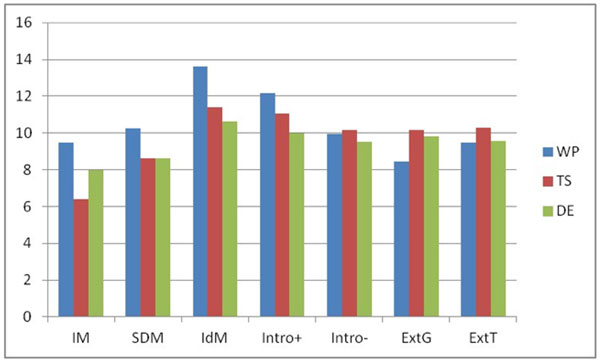
Figure 1. Averaged profiles of academic motivation types in the Waldorf Pedagogy (WP), traditional system (TS), and Elkonin-Davydov developmental education (DE) systems Note. IM = Intrinsic Cognitive Motivation, SDM = Intrinsic Self-Development Motivation IdM = Identified Motivation, Intro+ = Positive Introjected Motivation, Intro- = Negative Introjected Motivation, ExtG = External Motivation (General), ExtT = External Motivation (Teacher-Related)
The second research question examined whether response types in situations of uncertainty differ across educational systems. Specifically, we assessed differences in the parameters search activity and passive avoidance. In the original methodology, scores on both scales range from -12 to 12; however, for this analysis, these scores were converted, by a factor of 2, to a scale from 0 to 24.
Similarly, a one-way analysis of variance (ANOVA) was used to compare the educational systems. The mean scores on the scales for the three groups and the test statistics can be found in Table 3.
Table 3
One-Way ANOVA Results for Behavioral Response Scales by Educational System
|
|
Mean |
F (Welch) |
p-value |
||
|
WP (N =19) |
TE (N = 18) |
DE (Т = 16) |
|||
|
Search Activity |
14.05 |
12.22 |
14.13 |
4.49 |
0.019 |
|
Passive Avoidance |
9.00 |
10.72 |
9.50 |
1.99 |
0.154 |
As can be seen from Table 3 and Figure 2, for the variable search activity, the significance level of the test statistic is .019, indicating the presence of statistically significant differences on this scale among the three groups. The difference between the Waldorf Pedagogy (WP) and Elkonin-Davydov developmental education (DE) systems is not significant (M = 14.05 and M = 14.13, respectively). However, the mean score for the traditional system (TS) (M = 12.22) is significantly lower than that for the DE system and is close to being significantly lower than that for the WP system, as evidenced by the post-hoc comparisons of mean values.
The mean difference between the DE and TS groups is 1.9 (p = .039). The mean difference between the WP and TS groups is 1.83 (p = .098). The mean difference between the WP and DE groups is -0.07 (p = .997).
For the Passive Avoidance scale, no significant differences were found between the groups (p = .154).
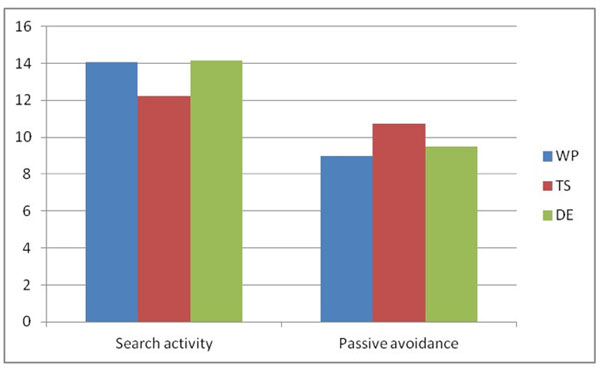
Figure 2. Profiles of response types in situations of uncertainty in the Waldorf Pedagogy (WP), Traditional System (TS), and Elkonin-Davydov Developmental Education (DE) systems.
Subsequently, Pearson's correlation coefficient was used to test the hypothesis that there exists a relationship between different types of academic motivation and response types. The correlation matrix is presented in Table 4. As illustrated in Table 4, a significant negative correlation was found between general external motivation and search activity. However, expected directions of relationships between variables that did not reach the significance level of .05 can still be observed. For instance, there is a non-significant positive correlation between intrinsic cognitive motivation and search activity (r = .216), while non-significant negative correlations were found between types of external motivation (negative introjected and teacher-related external motivation), which aligns with our expectations regarding the direction of relationships between the studied variables.
Regarding the tendency towards passive avoidance, a non-significant negative correlation was found with intrinsic cognitive motivation, and positive correlations were observed with all types of external motivation except identified motivation, which represented a very weak negative correlation.
Thus, the directions of the relationships (positive/negative) between the variables coincide with theoretically expectations, confirming our hypotheses. However, only the inverse correlation between external motivation and search activity reached statistical significance.
Table 4
Correlations between Types of Academic Motivation and Response Types in Situations of Uncertainty
|
|
Search Activity |
Passive Avoidance |
|
Intrinsic Cognitive Motivation |
.216 |
- .140 |
|
Intrinsic Self-Development Motivation |
.038 |
.061 |
|
Identified Motivation |
.008 |
- .019 |
|
Positive Introjected Motivation |
-.033 |
.126 |
|
Negative Introjected Motivation |
- .255 |
.167 |
|
External Motivation (General) |
- .296* |
.226 |
|
External Motivation (Teacher-Related) |
-.180 |
.137 |
Note. * p <.05
Discussion
This study concerning the differences in academic motivation and search activity among students from different educational systems revealed statistically significant differences in these parameters.
Differences were found between the schools according to the level of certain autonomous motivation types, specifically a significantly higher level of intrinsic cognitive and identified motivation among children from the Waldorf Pedagogy (WP) system compared to the other two groups. No differences were found between the three groups regarding controlled types of extrinsic motivation.
Conversely, previous studies by domestic researchers T.O. Gordeeva, I.V. Voronkova, and others, which compared traditional and developmental education, found a predominance of intrinsic and identified motivation (Gordeeva et al., 2019) and substantive learning motives (Voronkova et al., 2022) among students in the developmental education (DE) system, while children in the traditional system (TS) showed higher levels of positive introjected motivation (Gordeeva et al., 2021). International studies analyzing academic motivation in schools with grading systems corresponding to the traditional educational system revealed similar results: such children exhibited a decrease in autonomous motivation and an increase in controlled academic motivation (Krijgsman et al., 2017; Grolnick & Ryan, 1987). Since no studies in this area have included children from Waldorf schools, it is not possible to compare obtained results with data from similar research. However, given that this educational system, like the DE system, is characterized by a grade-free assessment approach, the identified differences are theoretically explicable.
Differences were also found in the level of search activity (SA)—the orientation toward seeking new problem-solving paths. Specifically, a significantly higher level of this parameter was found among students in the DE system compared to children from the TS school. This result was expected, given that within the Elkonin-Davydov system, search activity is a developmental effect of the pedagogical approach. No differences were found between the schools according to the level of the tendency toward passive avoidance (PA), which represents a refusal to attempt problem-solving. These observed differences are consistent with the results obtained by Zuckerman and Venger (2010).
Finally, a statistically significant negative correlation was identified between external motivation and search activity. This also conforms to expectations, as children, whose activity is motivated primarily by pressure from their social environment, are likely to be less active in seeking new problem-solving methods. It is important to note that no previous attempts have been made to trace the relationship between these variables, thus we cannot reference similar studies.
When interpreting the results of this study, certain limitations should be taken into account. Our research featured a relatively small sample size (16-19 representatives per group). Consequently, we cannot draw conclusions about the sample's representativeness or, by extension, the generalizability of the findings to the broader population of schoolchildren. Furthermore, within the Waldorf Pedagogy (WP) subgroup, the gender distribution was uneven (5 boys to 14 girls), which could have also influenced the results. Finally, the study was conducted with fourth and fifth -grade students simultaneously (in the Waldorf school and traditional and developmental education schools respectively). Therefore, we cannot rule out influences occurring during the transition to secondary school, for fifth graders, as it pertains to the levels of academic motivation and search activity. This transition entails an increase in the number of subjects and specialized teachers, a change in leading activity, the hierarchy of motives, and so forth, which could account for differences in the studied variables between these different, albeit similarly aged, grades. It is also important to note that the specific nature of academic motivation in the traditional class could have been determined by the particular features of the educational process in that specific school including the textbooks and workbooks used, the teacher's professionalism and so on. It is possible that in a different traditional classroom, we might have obtained qualitatively different results. Although, similar limitations could be applied to the other two schools under investigation.
Conclusion
The study demonstrated that there are indeed differences between the three groups from different educational systems, both in terms of academic motivation characteristics and in the response type of search activity in situations of uncertainty. Furthermore, we identified a relationship between certain parameters, specifically an inverse interdependence between external motivation and search activity, as well as interesting, albeit non-significant, correlation directions that aligned with our initial assumptions. Therefore, we believe this opens horizons for further research. It is plausible that a larger sample size would establish statistically significant differences between the groups regarding the other types of motivation (i.e., self-development motivation, introjected, and external motivation) and passive avoidance, as well as new relationships between the studied variables.
Ethics Statement
Approved by the Ethics Commission for Scientific Research at the Federal Scientific Center for Psychological and Interdisciplinary Research (conclusion dated 31.01.2024 No. 4)
Informed Consent from the Participants’ Legal Guardians
Written informed consent to participate in this study was provided by the parents of all students.
Author Contributions
A.S. conceived the idea. P.S. collected the data. A.S. and P.S. supervised the results of this work. All the authors discussed the results and contributed to the final manuscript.
Conflict of Interest
The authors declare no conflict of interest.
References
Comenius, J.A. (2022). Velikaia didaktika [The great didactic]. Moscow: Kniga po trebovaniyu.
Davydov, V.V. (1972). Vidy obobshcheniia v obuchenii. Logiko-psikhologicheskie problemy postroeniia uchebnykh predmetov [Types of generalization in learning: (Logical-psychological problems of constructing school subjects]. Moscow: Pedagogika.
Davydov, V.V. (1974). Analiz didakticheskikh printsipov traditsionnoĭ shkoly i vozmozhnykh printsipov obucheniia v shkole budushchego [Analysis of didactic principles of the traditional school and possible principles of teaching in the near future]. In Psikhologicheskie osobennosti vypusknikov sredneĭ shkoly i uchashchikhsia professionalʹno-tekhnicheskikh uchilishch [Psychological characteristics of secondary school graduates and vocational school students] (p. 3–14). Moscow Regional Pedagogical Institute named after N.K. Krupskaya.
Davydov, V.V. (1996). Teoriya razvivayushchego obucheniya [The Theory of Developmental Education]. Pedagogika
Deci, E.L., & Ryan, R.M. (2008). Facilitating optimal motivation and psychological well-being across life’s domains. Canadian Psychology/Psychologie Canadienne, 49(1), 14–23. https://doi.org/10.1037/0708-5591.49.1.14
Gordeeva, T.O. (2010). Motivy uchebnoĭ deiatelʹnosti uchashchikhsia srednikh i starshikh klassov sovremennoĭ massovoĭ shkoly [Motives of educational activity of middle and high school students in modern mass schools]. Psikhologiia Obucheniia [Psychology of Education], 6, 17–32.
Gordeeva, T.O., & Shepeleva, E.A. (2011). Vnutrenniaia i vneshniaia uchebnaia motivatsiia akademicheski uspeshnykh shkolʹʹnikov [Intrinsic and extrinsic learning motivation of academically successful schoolchildren]. Vestnik MGU. Seriia 14. Psikhologiia [Lomonosov Psychology Journal], 3, 33–45.
Gordeeva, T.O., Sychev, O.A., & Osin, E.N. (2013). Vnutrenniaia i vneshniaia uchebnaia motivatsiia studentov: ikh istochniki i vliyanie na psikhologicheskoe blagopoluchie [Intrinsic and extrinsic learning motivation of students: Their sources and impact on psychological well-being]. Voprosy Psychologii [Issues of Psychology], 1, 35–45.
Gordeeva, T.O. (2014). Bazovye tipy motivatsii deiatelʹnosti: potrebnostnaia modelʹ [Basic types of activity motivation: A needs-based model]. Vestnik MGU. Seriia 14. Psikhologiia [Lomonosov Psychology Journal], 3, 63–78.
Gordeeva, T.O., Sychev, O.A., Pshenichnuk, D.V., & Sidneva, A.N. (2018). Academic motivation of elementary school children in two educational approaches—innovative and traditional. Psychology in Russia: State of the Art, 11(4), 19–36. https://doi.org/10.11621/pir.2018.0402
Gordeeva, T.O., Sychev, O.A., Sidneva, A.N., & Pshenichnyuk, D.V. (2019). Ot chego zavisit zhelanie mladshikh shkolʹʹnikov uchitʹʹsia? Struktura predmetnoĭ motivatsii shkolʹʹnikov, obuchai͡ushchikhsia v ramkakh raznykh obrazovatelʹʹnykh sistem [What determines the desire of primary school children to learn? The structure of subject motivation of schoolchildren studying within different educational systems]. Vestnik Rossiiskogo Fonda Fundamentalʹʹnykh Issledovanii [Russian Foundation for Basic Research Journal], 4(104), 31–40. https://doi.org/10.22204/2410-4639-2019-104-04-31-40
Gordeeva, T.O., Sychev, O.A., & Lynch, M.F. (2020). The construct validity of the Russian version of the Modified Academic Self-Regulation Questionnaire (SRQ-A) among elementary and middle school children. Psychology in Russia: State of the Art, 13(3), 113–131. https://doi.org/10.11621/pir.2020.0308
Gordeeva, T.O., Sychev, O.A., & Sidneva, A.N. (2021). Otsenivanie dostizhenii shkolʹnikov v traditsionnoĭ i razvivaiushcheĭ sistemakh obucheniia: psikhologo-pedagogicheskii analiz [Assessment of students’ achievements in traditional and developmental education systems: A psychological-pedagogical analysis]. Voprosy Obrazovaniia [Educational Studies Moscow], 1, 213–236. https://doi.org/10.17323/1814-9545-2021-1-213-236
Grolnick, W.S., & Ryan, R.M. (1987). Autonomy in children's learning: An experimental and individual difference investigation. Journal of Personality and Social Psychology, 52(5), 890–898. https://doi.org/10.1037//0022-3514.52.5.890
Kartashova, V. N. (2020). Organizatsionno-metodicheskie osobennosti obucheniia v nemetskoi valʹʹdorfskoĭ shkole [Organizational and methodological features of education in the German Waldorf school]. Sibirskii Uchitelʹ [Siberian Teacher], 2, 88–93.
Krijgsman, C., Vansteenkiste, M., van Tartwijk, J., Maes, J., Borghouts, L., Cardon, G., ... & Haerens, L. (2017). Performance grading and motivational functioning and fear in physical education: A self-determination theory perspective. Learning and Individual Differences, 55, 202-211. https://doi.org/10.1016/j.lindif.2017.03.017
Rotenberg, V.S. (2001). Dreams, hypnosis and brain activity. Moscow: RON.
Ryan, R.M., & Deci, E.L. (2000). Self-determination theory and the facilitation of intrinsic motivation, social development, and well-being. Am. Psychol. 55, 68–78. https://doi.org/10.1037/0003-066X.55.1.68
Ryan, R.M., & Connell, J.P. (1989). Perceived locus of causality and internalization: Examining reasons for acting in two domains. Journal of Personality and Social Psychology, 57(5), 749–761. https://doi.org/10.1037//0022-3514.57.5.749
Selsfors, H. (2024). Rhythmical and Balanced Education – a Matter of Trust and Boundaries. A hermeneutic phenomenological study about Pedagogic Practice in Swedish Waldorf-Steiner Schools. Thesis. University of Plymouth. https://doi.org/10.24382/5194
Sidneva, A.N., Vysotskaya, E.V., Korotaeva, I.V., Mozharovsky, I.L., Shinelis, V.A. (2020) How Do Primary Schoolchildren Use Concept Definitions in Recognition Tasks? Orientation Towards Given Knowledge in Two Different Educational Systems. Psychology in Russia: State of the Art, 13(2), 29–64. https://doi.org/10.11621/pir.2020.0203
Steiner, R. (1996). The art of education: Methodology and didactics. Moscow: Parsifal.
Umnyashova, I.B. (2006). Psikhologicheskaia sushchnostʹ otmetki v sovremennom obrazovanii [The psychological essence of grading in modern education]. Vestnik Prakticheskoi Psikhologii Obrazovaniia [Bulletin of Practical Psychology of Education], 3(3), 61–66.
Valeev, A.A. (2006). Valʹdorfskaia pedagogika i ee realizatsiia v praktike shkoly: Metodicheskie rekomendatsii dlia studentov pedagogicheskikh vuzov po istorii obrazovaniia i pedagogicheskoĭ mysli [Waldorf pedagogy and its implementation in school practice: Methodological recommendations for students of pedagogical universities on the history of education and pedagogical thought]. Kazan: TGGPU.
Venger, A., Rotenberg, V., & Desiatnikov, Y. (1996). Evaluation of search activity and other behavioral attitudes in indefinite situations. Dynamische Psychiatrie, 29(5-6), 368–377.
Voronkova, I.V. (2003). Osobennosti uchebnoĭ motivatsii i intellektualʹnogo razvitiia starshikh podrostkov, obuchaiushchikhsia v raznykh didakticheskikh sistemakh [Features of learning motivation and intellectual development of older adolescents studying in different didactic systems]. Psikhologicheskaia Nauka i Obrazovanie [Psychological Science and Education], 8(4), 80–88
Voronkova, I.V., Lagutina, E.N., & Adaskina, A.A. (2022). Osobennosti uchebnoi motivatsii i ėmotsionalʹnogo otnosheniia k ucheniiu obuchaiushchikhsia 4-kh klassov (na primere traditsionnogo i razvivaiushchego obucheniia) [Features of learning motivation and emotional attitude toward learning among 4th grade students (on the example of traditional and developmental education)]. Psikhologo-Pedagogicheskie Issledovaniia [Psychological-Educational Studies], 14(1), 32–48. https://doi.org/10.17759/psyedu.2022140103
Vygotsky, L.S. (2017). The problem of teaching and mental development at school age [Problema obucheniya i umstvennogo razvitiya v shkol’nom vozraste]. Changing English: Studies in Culture and Education. 24(4), 359–371. https://doi.org/10.1080/1358684X.2017.1395165
Walls, T.A., & Little, T.D. (2005). Relations among personal agency, motivation, and school adjustment in early adolescence. Journal of Educational Psychology, 97, 23. https://doi.org/10.1037/0022-0663.97.1.23
Zagvozdkin, V.K. (2002). Alʹternativy Valʹdorfskoi pedagogiki [Alternatives of Waldorf pedagogy]. Psikhologicheskaia Nauka i Obrazovanie [Psychological Science and Education], 1, 26–34
Zuckerman, G.A. (2001). Otsenka i samootsenka v obuchenii, osnovannom na teorii uchebnoi deiatel'nosti [Assessment and self-assessment in learning based on the theory of educational activity]. Nachal'naia Shkola: Plyus-Minus [Primary School: Plus-Minus], 1, 23–26.
Zuckerman, G.A., & Ermakova, I.V. (2003). Razvivaiushchie effekty sistemy D.B. El'konina–V.V. Davydova [Developmental effects of the D. B. Elkonin–V. V. Davydov system]. Psikhologicheskaia Nauka i Obrazovanie [Psychological Science and Education], 8(4), 56–73
Zuckerman, G.A. (2005). Sistema El'konina–Davydova kak resurs povysheniia kompetentnosti rossiiskikh shkol'nikov [The Elkonin–Davydov system as a resource for increasing the competence of Russian schoolchildren]. Voprosy Psychologii [Issues of Psychology], 4, 84–95.
Zuckerman, G.A., Shtykova, L.A., & Belareva, M.N. (2009). Pochemu piatibal'naia sistema otsenki uchebnykh dostizhenii okazyvaetsia vechnozhivoi? [Why the five-point grading system of academic achievement resists restructuring?]. Otsenka Kachestva Obrazovaniia [Assessment of Education Quality], 1, 44–54.
Zuckerman, G.A. (2010). Obuchenie vedet za soboi razvitie. Kuda? [Teaching leads development. Where to?]. Voprosy Obrazovaniya [Educational Studies], 1, 42–90.
Zuckerman, G.A., & Venger, A.L. (2010). Razvitie uchebnoi samostoiatel'nosti sredstvami shkol'nogo obrazovaniia [Development of learning independence by means of school education]. Psikhologicheskaia Nauka i Obrazovanie [Psychological Science and Education], 15(4), 77–90.