
Cyber Addiction and Loneliness in Adolescents: Psychological Correlates of Digital Socialization
Received: 07/05/2025
Accepted: 08/19/2025
DOI: 10.11621/ nicep.2025.0507
To cite this article:
Persiyantseva, S.V., Artemenkov, S. L. (2025). Cyber Addiction and Loneliness in Adolescents: Psychological Correlates of Digital Socialization. New Ideas in Child and Educational Psychology, 3-4 (5), 26-47. DOI: 10.11621/ nicep.2025.0507
Background. The study of cyber addiction in minors is associated with profound changes in the social environment in which the current generation of teenagers is developing. In modern society, Internet communications have become an important part of education, leisure, and maintaining interpersonal relationships. The digital environment is creating new formats of socialization, giving teenagers a special style of communication and perception of their place in society. This increases the risk of developing cyber communication addiction. Virtual contacts replace offline interactions, which affects the quality of socialization. The psychological consequences of cyber addiction and its connection with interpersonal relationships require further study.
Objective. To analyze the relationship between the level of cyber addiction (cyberdependency) and psychological characteristics of adolescents, including the subjective feeling of loneliness, as well as the characteristics of interpersonal interaction: authoritarianism, suspiciousness, friendliness, and other qualities that influence the ability to build stable social connections of direct communication (offline).
Design. The sample included 89 schoolchildren from Russia aged 13–18 (47% boys). Methods were used for identifying the level of subjective feelings of loneliness (Russell, Peplau & Ferguson, 1978), cybercommunication dependence (Toncheva, 2012) and interpersonal relationships (Leary, 1957) were used. Data analysis was carried out using descriptive statistics, determining Spearman correlations and constructing regularized networks of partial correlations, including comparisons of groups with different levels of cyberdependence. Calculations were performed using the R programming language.
Results. A high level of cyberdependency was detected in 58% of teenagers. In the overall sample, cyberdependency is positively associated with subjective loneliness, authoritarianism, suspiciousness, and subordination. This may reflect a complex and heterogeneous nature of interpersonal interaction among adolescents with varying levels of digital engagement. The analysis of the group of adolescents with a high level of cyberdependency revealed a different pattern of associations: in this group, cyberdependency is positively correlated with loneliness, but negatively correlated with friendliness and authoritarianism. The data suggest that as adolescents become more deeply immersed in the digital environment, they tend to be less socially active, avoid leadership roles, and increasingly experience emotional isolation. This combination of characteristics forms a psychological profile with a risk of social detachment, making it difficult to establish stable and trusting relationships. Network analysis and mean scores on the scales of T. Leary’s interpersonal behavior test indicate that adolescents with high cyberdependency tend to demonstrate a contradictory style of interpersonal interaction, simultaneously displaying, for example, friendliness and suspiciousness or submission and authoritarianism. These mixed traits may reflect internal conflicts or unstable interaction strategies. In contrast, adolescents with low levels of cyberdependency exhibit a more balanced and prosocial pattern: their friendliness is associated with altruism and moderate authoritarianism, reflecting a readiness for social initiative and responsibility. Altruism in this group is negatively associated with aggressiveness, which suggests a constructive orientation and successful socialization.
Conclusion. The average level of digital involvement among young people has increased significantly since the creation of the method for diagnosing cybercommunication addiction proposed by A.V. Toncheva in 2012. Cyber addiction in adolescents, on the one hand, is an adaptation to the digital environment, but it can also be an indicator of social and emotional vulnerability associated with a significant deformation of personality traits and requiring systematic work by specialists and parents. The necessary prevention of digital risks should be aimed at developing self-regulation skills in the use of digital technologies, stimulating live communication and emotional support in the family and school. Of particular importance is the formation of a critical attitude in adolescents to their own time online and an awareness of the consequences of excessive digital involvement for mental health and interpersonal relationships.
Highlights- The study examines the relationship between cybercommunication addiction, loneliness, and interpersonal characteristics in adolescents.
- A high level of cyber addiction was recorded in 58% of adolescents. The cyber addiction indicator in the overall sample is positively associated with loneliness, authoritarianism, and suspiciousness.
- Network analysis revealed structural differences in interpersonal characteristics between adolescents with high and low levels of cyber addiction.
- A higher level of cyberaddiction is accompanied by a decrease in friendliness and authoritarianism, along with increased feelings of loneliness. This reversal of the general trend highlights a shift in interpersonal dynamics among adolescents with high levels of digital involvement.
- The findings highlight the need to implement preventive strategies to strengthen the interpersonal resources of adolescents in the context of digitalization.
Актуальность. Изучение киберзависимости у несовершеннолетних связано с глубокими изменениями социальной среды, в которой развивается нынешнее поколение подростков. В современном обществе интернет-коммуникации стали важной частью образования, досуга и поддержания межличностных связей. Цифровая среда формирует новые форматы социализации, задавая подросткам особый стиль общения и восприятия своего места в обществе. Это повышает риск формирования киберкоммуникативной зависимости. Виртуальные контакты заменяют офлайн-взаимодействия, что влияет на качество социализации. Психологические последствия киберзависимости и её связь с межличностными отношениями требуют дальнейшего изучения.
Цель. Провести анализ взаимосвязей между уровнем киберзависимости и психологическими характеристиками подростков, включая субъективное ощущение одиночества, а также особенности межличностного взаимодействия: авторитарность, подозрительность, дружелюбность и другие качества, влияющие на способность выстраивать устойчивые социальные связи непосредственного общения (офлайн).
Дизайн. Выборка включала 89 школьников из России в возрасте 13–18 лет (из них 47% - мальчики). Применялись методики выявления уровня субъективного чувства одиночества (Рассел, Пеплау, Фергюсон, 1978), киберкоммуникативной зависимости (Тончева, 2012) и межличностных отношений (Лири, 1957). Анализ данных проводился с помощью описательной статистики, определения корреляций Спирмена и построения регуляризованных сетей частных корреляций, включая сравнения групп с разным уровнем киберзависимости. Расчёты выполнены с использованием языка программирования R.
Результаты. Высокий уровень киберзависимости выявлен у 58% подростков. В общей выборке подростков киберзависимость положительно связана с субъективным одиночеством, авторитаризмом, подозрительностью и подчинённостью. Это может отражать сложный и неоднородный характер межличностного взаимодействия у подростков с различным уровнем цифровой вовлечённости. Анализ группы подростков с высоким уровнем киберзависимости выявил иную структуру взаимосвязей: в этой группе киберзависимость положительно коррелирует с одиночеством, но отрицательно — с дружелюбием и авторитаризмом. Полученные данные позволяют предположить, что с ростом вовлечённости в цифровую среду подростки становятся менее социально активными, избегают лидерских ролей и всё чаще испытывают эмоциональную изоляцию. Такое сочетание характеристик формирует психологический профиль с риском социальной отчуждённости, затрудняющий построение стабильных, доверительных отношений.Сетевой анализ и средние баллы по шкалам теста межличностного поведения Т. Лири указывают на то, что подростки с высокой степенью киберзависимости склонны демонстрировать противоречивый стиль межличностного взаимодействия, одновременно проявляя, например, дружелюбие и подозрительность или подчинение и авторитаризм. Эти смешанные черты могут отражать внутренние конфликты или неустойчивые стратегии взаимодействия. Напротив, подростки с низким уровнем киберзависимости демонстрируют более сбалансированную и просоциальную модель поведения: их дружелюбие ассоциируется с альтруизмом и умеренным авторитаризмом, что отражает готовность к социальной инициативе и ответственности. Альтруизм в этой группе негативно связан с агрессивностью, что говорит о конструктивной ориентации и успешной социализации.
Вывод. Средний уровень цифровой вовлечённости среди молодежи заметно вырос с момента создания методики диагностики киберкоммуникативной зависимости, предложенной А.В. Тончевой в 2012 году. Киберзависимость у подростков, с одной стороны, является адаптацией к цифровой среде, но с другой — может выступать индикатором социальной и эмоциональной уязвимости, связанной с существенной деформацией качеств личности и требующей системной работы специалистов и родителей. Необходимаяпри этом профилактика цифровых рисков должна быть направлена на развитие навыков саморегуляции в использовании цифровых технологий, стимулирование живого общения и эмоциональной поддержки в семье и школе. Особое значение приобретает формирование у подростков критического отношения к собственному времени в сети и осознание последствий чрезмерной цифровой вовлечённости для психического здоровья и межличностных связей.
Ключевые положения- Исследование посвящено изучению взаимосвязи киберкоммуникативной зависимости, одиночества и межличностных характеристик у подростков.
- Высокий уровень киберзависимости зафиксирован у 58% подростков. Показатель киберзависимости в общей выборке положительно связан с одиночеством, авторитарностью и подозрительностью.
- Сетевой анализ выявил структурные различия в межличностных характеристиках между подростками с высоким и низким уровнем киберзависимости.
- Более высокий уровень киберзависимости сопровождается снижением дружелюбия и авторитарности, а также усилением чувства одиночества. Это изменение направления взаимосвязей по сравнению с общей выборкой подчёркивает особенности межличностного взаимодействия подростков с высокой цифровой вовлечённостью.
- Полученные данные подчеркивают необходимость осуществления профилактических стратегий для укрепления межличностных ресурсов подростков в условиях цифровизации.
Antecedentes. El estudio de la adicción cibernética en menores está asociado con cambios profundos en el entorno social en el que se desarrolla la generación actual de adolescentes. En la sociedad moderna, las comunicaciones por Internet se han convertido en una parte importante de la educación, el ocio y el mantenimiento de las relaciones interpersonales. El entorno digital está creando nuevos formatos de socialización, otorgando a los adolescentes un estilo de comunicación particular y una percepción específica de su lugar en la sociedad. Esto aumenta el riesgo de desarrollar adicción a la comunicación cibernética. Los contactos virtuales reemplazan las interacciones presenciales (offline), lo que afecta la calidad de la socialización. Las consecuencias psicológicas de la adicción cibernética y su conexión con las relaciones interpersonales requieren mayor estudio.
Objetivo. Analizar la relación entre el nivel de adicción cibernética (ciberdependencia) y las características psicológicas de los adolescentes, incluyendo la sensación subjetiva de soledad, así como las características de la interacción interpersonal: autoritarismo, suspicacia, amigabilidad y otras cualidades que influyen en la capacidad de construir vínculos sociales estables de comunicación directa (offline).
Diseño. La muestra incluyó a 89 escolares de Rusia de 13 a 18 años (47% varones). Se utilizaron métodos para identificar el nivel de sensación subjetiva de soledad (Russell, Peplau & Ferguson, 1978), la dependencia de la comunicación cibernética (Toncheva, 2012) y las relaciones interpersonales (Leary, 1957). El análisis de datos se llevó a cabo utilizando estadística descriptiva, determinando correlaciones de Spearman y construyendo redes regularizadas de correlaciones parciales, incluyendo comparaciones de grupos con diferentes niveles de ciberdependencia. Los cálculos se realizaron utilizando el lenguaje de programación R.
Resultados. Se detectó un alto nivel de ciberdependencia en el 58% de los adolescentes. En la muestra total, la ciberdependencia se asocia positivamente con la soledad subjetiva, el autoritarismo, la suspicacia y la sumisión. Esto puede reflejar una naturaleza compleja y heterogénea de la interacción interpersonal entre adolescentes con distintos niveles de compromiso digital. El análisis del grupo de adolescentes con un alto nivel de ciberdependencia reveló un patrón diferente de asociaciones: en este grupo, la ciberdependencia se correlaciona positivamente con la soledad, pero negativamente con la amigabilidad y el autoritarismo. Los datos sugieren que, a medida que los adolescentes se sumergen más profundamente en el entorno digital, tienden a ser menos activos socialmente, evitan los roles de liderazgo y experimentan cada vez más un aislamiento emocional. Esta combinación de características forma un perfil psicológico con riesgo de desapego social, dificultando el establecimiento de relaciones estables y de confianza. El análisis de redes y las puntuaciones medias en las escalas del test de comportamiento interpersonal de T. Leary indican que los adolescentes con alta ciberdependencia tienden a demostrar un estilo de interacción interpersonal contradictorio, mostrando simultáneamente, por ejemplo, amigabilidad y suspicacia o sumisión y autoritarismo. Estos rasgos mixtos pueden reflejar conflictos internos o estrategias de interacción inestables. Por el contrario, los adolescentes con bajos niveles de ciberdependencia exhiben un patrón más equilibrado y prosocial: su amigabilidad se asocia con el altruismo y un autoritarismo moderado, reflejando una disposición para la iniciativa social y la responsabilidad. El altruismo en este grupo se asocia negativamente con la agresividad, lo que sugiere una orientación constructiva y una socialización exitosa.
Conclusión. El nivel medio de involucramiento digital entre los jóvenes ha aumentado significativamente desde la creación del método para diagnosticar la adicción a la comunicación cibernética propuesto por A.V. Toncheva en 2012. La adicción cibernética en adolescentes, por un lado, es una adaptación al entorno digital, pero también puede ser un indicador de vulnerabilidad social y emocional asociada con una deformación significativa de los rasgos de personalidad, que requiere un trabajo sistemático por parte de especialistas y padres. La necesaria prevención de riesgos digitales debe estar dirigida a desarrollar habilidades de autorregulación en el uso de tecnologías digitales, estimulando la comunicación presencial y el apoyo emocional en la familia y la escuela. Es de particular importancia la formación de una actitud crítica en los adolescentes hacia su propio tiempo en línea y la concienciación sobre las consecuencias de la excesiva involucración digital para la salud mental y las relaciones interpersonales.
Destacados- El estudio examina la relación entre la adicción a la comunicación cibernética, la soledad y las características interpersonales en adolescentes.
- Se registró un alto nivel de adicción cibernética en el 58% de los adolescentes. El indicador de adicción cibernética en la muestra total se asocia positivamente con la soledad, el autoritarismo y la suspicacia.
- El análisis de redes reveló diferencias estructurales en las características interpersonales entre adolescentes con niveles altos y bajos de adicción cibernética.
- Un mayor nivel de adicción cibernética se acompaña de una disminución de la amigabilidad y el autoritarismo, junto con un aumento de los sentimientos de soledad. Esta inversión de la tendencia general subraya un cambio en la dinámica interpersonal entre los adolescentes con altos niveles de involucramiento digital.
- Los hallazgos destacan la necesidad de implementar estrategias preventivas para fortalecer los recursos interpersonales de los adolescentes en el contexto de la digitalización.
Origines. L'étude de la cyberdépendance chez les mineurs est associée à des changements profonds dans l'environnement social dans lequel se développe la génération actuelle d'adolescents. Dans la société moderne, les communications Internet sont devenues une partie importante de l'éducation, des loisirs et du maintien des relations interpersonnelles. L'environnement numérique crée de nouveaux formats de socialisation, offrant aux adolescents un style de communication particulier et une perception de leur place dans la société. Cela augmente le risque de développer une dépendance à la cybercommunication. Les contacts virtuels remplacent les interactions hors ligne, ce qui affecte la qualité de la socialisation. Les conséquences psychologiques de la cyberdépendance et son lien avec les relations interpersonnelles nécessitent une étude plus approfondie.
Objectif. Analyser la relation entre le niveau de cyberdépendance et les caractéristiques psychologiques des adolescents, incluant le sentiment subjectif de solitude, ainsi que les caractéristiques de l'interaction interpersonnelle : autoritarisme, méfiance, amabilité et autres qualités influençant la capacité à construire des liens sociaux stables de communication directe (hors ligne).
Conception. L'échantillon comprenait 89 écoliers de Russie âgés de 13 à 18 ans (47% de garçons). Des méthodes d'identification du niveau de sentiment subjectif de solitude (Russell, Peplau & Ferguson, 1978), de dépendance à la cybercommunication (Toncheva, 2012) et des relations interpersonnelles (Leary, 1957) ont été utilisées. L'analyse des données a été réalisée à l'aide de statistiques descriptives, du calcul des corrélations de Spearman et de la construction de réseaux régularisés de corrélations partielles, incluant des comparaisons de groupes avec différents niveaux de cyberdépendance. Les calculs ont été effectués en utilisant le langage de programmation R.
Résultats. Un niveau élevé de cyberdépendance a été détecté chez 58 % des adolescents. Dans l'échantillon global, la cyberdépendance est positivement associée à la solitude subjective, à l'autoritarisme, à la méfiance et à la subordination. Cela peut refléter une nature complexe et hétérogène de l'interaction interpersonnelle chez les adolescents avec différents niveaux d'engagement numérique. L'analyse du groupe d'adolescents avec un niveau élevé de cyberdépendance a révélé un modèle d'associations différent : dans ce groupe, la cyberdépendance est positivement corrélée à la solitude, mais négativement corrélée à l'amabilité et à l'autoritarisme. Les données suggèrent qu'à mesure que les adolescents s'immergent plus profondément dans l'environnement numérique, ils ont tendance à être moins socialement actifs, à éviter les rôles de leader et à ressentir de plus en plus d'isolement émotionnel. Cette combinaison de caractéristiques forme un profil psychologique avec un risque de détachement social, rendant difficile l'établissement de relations stables et de confiance. L'analyse de réseau et les scores moyens aux échelles du test de comportement interpersonnel de Timothy Leary indiquent que les adolescents avec une cyberdépendance élevée tendent à démontrer un style d'interaction interpersonnelle contradictoire, affichant simultanément, par exemple, de l'amabilité et de la méfiance ou de la soumission et de l'autoritarisme. Ces traits mixtes peuvent refléter des conflits internes ou des stratégies d'interaction instables. En revanche, les adolescents avec de faibles niveaux de cyberdépendance présentent un modèle de comportement plus équilibré et prosocial : leur amabilité est associée à l'altruisme et à un autoritarisme modéré, reflétant une readiness pour l'initiative sociale et la responsabilité. L'altruisme dans ce groupe est négativement associé à l'agressivité, ce qui suggère une orientation constructive et une socialisation réussie.
Conclusion. Le niveau moyen d'engagement numérique chez les jeunes a considérablement augmenté depuis la création de la méthode de diagnostic de la dépendance à la cybercommunication proposée par A.V. Toncheva en 2012. La cyberdépendance chez les adolescents est, d'une part, une adaptation à l'environnement numérique, mais elle peut aussi être un indicateur de vulnérabilité sociale et émotionnelle, associée à une déformation significative des traits de personnalité et nécessitant un travail systématique de la part des spécialistes et des parents. La prévention nécessaire des risques numériques devrait viser à développer des compétences d'autorégulation dans l'utilisation des technologies numériques, à stimuler la communication en direct et le soutien émotionnel dans la famille et à l'école. La formation d'une attitude critique chez les adolescents vis-à-vis de leur propre temps passé en ligne et la prise de conscience des conséquences d'un engagement numérique excessif sur la santé mentale et les relations interpersonnelles revêt une importance particulière.
Points principaux- L'étude examine la relation entre la dépendance à la cybercommunication, la solitude et les caractéristiques interpersonnelles chez les adolescents.
- Un niveau élevé de cyberdépendance a été enregistré chez 58 % des adolescents. L'indicateur de cyberdépendance dans l'échantillon global est positivement associé à la solitude, à l'autoritarisme et à la méfiance.
- L'analyse de réseau a révélé des différences structurelles dans les caractéristiques interpersonnelles entre les adolescents avec des niveaux élevés et faibles de cyberdépendance.
- Un niveau plus élevé de cyberdépendance s'accompagne d'une diminution de l'amabilité et de l'autoritarisme, ainsi que d'une augmentation du sentiment de solitude. Ce renversement de la tendance générale met en évidence un changement dans la dynamique interpersonnelle parmi les adolescents avec des niveaux élevés d'engagement numérique.
- Les résultats soulignent la nécessité de mettre en œuvre des stratégies préventives pour renforcer les ressources interpersonnelles des adolescents dans le contexte de la numérisation.
Introduction
Digitalization of all spheres of public life, intensive implementation of information and communication technologies (ICT), and mass use of gadgets have radically changed the ways of obtaining knowledge, methods of communication and organization of leisure. In cyber society, information circulating in the network space becomes "a new substantive unit, determining modern culture" (Rubtsova, 2019, p. 118). With the penetration of artificial intelligence technologies, society is entering the fifth information revolution, in which not only computing functions are transferred to the intellectual information environment, but also tasks that were previously considered the exclusive prerogative of human thinking.
These processes have led to the development of cyberpsychology as an independent scientific field that studies the patterns of human mental life in the digital environment (Attrill-Smith et al., 2018). It focuses on the psychological mechanisms of thinking, interpretation, and behavior in the process of online interactions, as well as the features of identity formation in virtual spaces. The leading task of cyberpsychology remains the analysis of how technologies transform perception, cognitive strategies, and social dynamics of the individual, including “a wide range of problems related to various aspects of human interaction with technologies” (Rubtsova, 2019, p. 119). In particular, increased mediation in human communication processes leads to a general deterioration in sensitivity and problems with perception (Artemenkov, 2020, 2021a, 2021b). Research also shows that the cyber environment can destabilize the process of mental development in children and adolescents (Perezhogin et al., 2018).
A special place in the cyberpsychological discourse is occupied by the phenomenon of loneliness, which is consistently associated with Internet addiction and the transformation of social connections (Kuss & Griffiths, 2017; Nowland et al., 2018). Loneliness is considered an uncomfortable subjective experience arising from a deficit or low quality of interpersonal relationships (Wu et al., 2024). A study of Chinese schoolchildren showed that loneliness and involvement in social networks mutually reinforce each other, forming a bidirectional relationship (Wu et al., 2024). Difficulties in forming and maintaining meaningful connections are associated with anxiety, depression, and an increased need for social contacts (Cacioppo et al., 2009).
Online social networks, due to their scale and anonymity, provide convenient opportunities to compensate for the lack of communication. Empirical data show that people experiencing loneliness are more likely to resort to online communication as a substitute resource (Morahan-Martin & Schumacher, 2000; O’Day & Heimberg, 2021). Moreover, the greater the loneliness, the more intense the desire for social fulfillment in the virtual environment (Błachnio et al., 2016).
An alternative research perspective emphasizes the opposite effect: excessive involvement in social networks contributes to increased loneliness. According to operant learning theory, any behavior that leads to short-term relief tends to be reinforced (Skinner, 1953). Extended online time often displaces offline communication and replaces it with superficial connections with strangers (Morahan-Martin & Schumacher, 2003). In the long term, this leads to weakening of real social ties and a reduced sense of belonging. Moreover, online communications rarely compensate for the need for deep interpersonal interactions, creating the effect of technological alienation and communication barriers (Dickey, 2004). These barriers hinder full interaction and increase the feeling of social isolation (Chen et al., 2022; Marttila et al., 2021).
Internet addiction is associated with a wide range of psychological consequences. A meta-analysis by Soriano-Molina et al. (2025), which covered data from over 300,000 adolescents, found positive correlations between Internet addiction and aggression, depression, anxiety, and suicidal tendencies, as well as negative correlations with well-being and self-esteem. The association between Internet addiction and depression, anxiety, and stress is supported by a number of studies (Ding et al., 2023; González-Bueso et al., 2018; Ma, 2022; Ran et al., 2022; Wu et al., 2024). An association has also been established with chronic sleep disorders (Daraj et al., 2023; Jiaxin et al., 2020; Vahedi & Saiphoo, 2018) and a deterioration in general mental health (Devi & Singh, 2023; Godard & Holtzman, 2024). Systematic reviews also note the impact of Internet addiction on decreased self-esteem and increased psychological distress (Bochaver, 2019; Hussain et al., 2020; Keles et al., 2019; Piteo & Ward, 2020; Woods & Scott, 2016).
Thus, the influence of the digital environment on the mental and social development of adolescents is multifactorial. Loneliness, Internet addiction, and a weak subjective position increase vulnerability to the risks of digital and virtual space. A comparative analysis of Russian and European adolescents showed that Russian schoolchildren are more involved in digital communication and less resistant to the risks of Internet addiction and cyberbullying (Soldatova & Rasskazova, 2023). At the same time, insufficient attention has been paid to the study of cyber addiction among Russian adolescents in connection with their qualities of interpersonal interaction.
The purpose of this study is to identify possible relationships between the level of cyber addiction and psychological characteristics of adolescents, including loneliness, authoritarianism, suspiciousness, friendliness, and other parameters of interpersonal interaction.
Methods
The study used psychodiagnostic methods aimed at assessing the level of cyber addiction, the degree of loneliness, and the characteristics of interpersonal relationships in adolescents. To identify the level of subjective loneliness, the method of D. Russell, L. Peplau and M. Ferguson (Russell, Peplau & Ferguson, 1978), was used, adapted to the Russian context (Vodopyanova, 2009). This method allows us to assess the degree of dissatisfaction with the quality and quantity of social connections, as well as to identify individual characteristics of the perception of social isolation. This questionnaire is widely used in studies of the adolescent population, since loneliness at this age becomes a critical factor influencing the formation of identity and psycho-emotional state.
The degree of cybercommunication addiction was assessed using the method of A.V. Toncheva (Toncheva, 2012). This tool allows us to diagnose the features of teenagers' interaction with the digital environment, including the degree of their involvement in online communications and signs of addiction to virtual communication. The method includes scales that assess the compulsiveness of using digital devices, impaired control over time spent online, as well as the impact of cybercommunications on daily activities and emotional state. Cybercommunication addiction includes conditions in which control over time on the Internet is lost, the perception of social relations is distorted, and a persistent desire for online communication is formed.
To study the personal characteristics of interpersonal interaction, the test of diagnostics of interpersonal relations by T. Leary (Leary, 1957), was used, adapted to the Russian context (Sobchik, 1990). This tool allows us to determine stable behavioral styles and strategies of interaction of teenagers with others. The profile of interpersonal relations formed as a result of the test makes it possible to assess the tendency of the teenager to dominate, submit, cooperate or be in conflict in various social situations.
The complex application of the specified methods produces a holistic idea of the relationship between the level of cyber addiction, the feeling of loneliness, and the nature of interpersonal relations in teenagers.
Participants
The study sample consisted of 89 students from Russian state comprehensive schools aged 13 to 18 years (M = 15.42; SD = 1.18), of which 47% were boys/young men, which ensures a gender-balanced distribution. The study was conducted at educational institutions in Moscow and the Moscow region with the voluntary consent of the schoolchildren and their parents to participate in the research work.
Procedure
The study was conducted in a hybrid format, both in person and remotely using the Google platform. Diagnostic work in classes was carried out in groups of 10–15 under standard conditions that ensure compliance with the principles of confidentiality and voluntary participation. In the online format, students completed surveys individually, while instructions and support were provided through electronic communication channels.
Each participant was offered a set of diagnostic methods aimed at studying the level of cybercommunication dependence, the subjective feeling of loneliness, and the characteristics of interpersonal relationships. For ease of processing and analysis, each psychological indicator was assigned a conditional designation, presented in Table 1.
Table 1
Symbols of the Studied Indicators
|
# |
Symbol |
Meaning |
Methods |
|
|
1 |
L |
Loneliness |
Subjective feeling of loneliness |
|
|
2 |
C |
Cyberaddiction |
Cybercommunication addiction |
|
|
3 |
R |
Authoritarianism |
I |
Interpersonal Relationships by T. Leary |
|
4 |
S |
Selfishness |
II |
|
|
5 |
G |
Aggressiveness |
III |
|
|
6 |
P |
Suspiciousness |
IV |
|
|
7 |
D |
Subordination |
V |
|
|
8 |
Z |
Dependent |
VI |
|
|
9 |
F |
Friendliness |
VII |
|
|
10 |
T |
Altruism |
VIII |
|
Data processing included calculation of descriptive statistics, Spearman correlation analysis, and construction of partial correlation networks with regularization. Statistical analysis and visualization of networks were performed in the R programming environment.
The participants were divided into three groups depending on their level of cybercommunication dependence: low (0–49 points), medium (50–81 points), and high (82–100 points). A comparative analysis of psychological characteristics and the structure of interpersonal relationships was conducted between two contrasting groups, those with low and high levels of cyberdependence, which made it possible to identify the most pronounced differences and connections between the studied indicators.
Results
Analysis of the level of cybercommunication addiction among the teenagers showed that a high level of addiction (according to the criteria of A.V. Toncheva’s method — from 80 to 100 points) was demonstrated by 58% of the sample. The median was 82 points, and the average was 74.8 points. The subjective feeling of loneliness, measured using the method of D. Russell and M. Ferguson, averaged 36 points out of 60 possible, which is 20% higher than the average level specified in the test instructions. The analysis of interpersonal relationships using T. Leary’s method revealed that for all eight scales, the average values exceed the normative level by 8 points. Figure 1 shows a pie chart of average values for Leary’s scales.
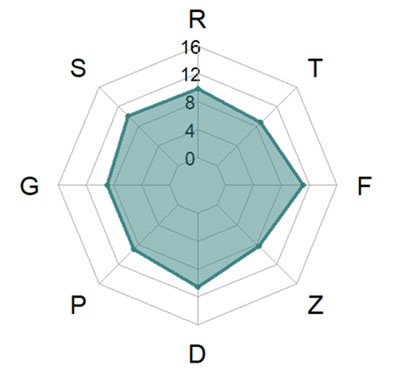
Figure 1. Average values of eight blocks for T. Leary’s test of diagnostics of interpersonal relations
A correlation analysis was conducted for the entire sample of adolescents using the Spearman method, aimed at identifying the relationships among the indicators of subjective loneliness, the level of cybercommunication dependence, and the characteristics of interpersonal relationships. The analysis allowed us to determine not only the presence, but also the direction and strength of the relationships between all the variables studied, which creates the basis for constructing a comprehensive model of the interaction of psychological factors in the context of digital socialization. Summary information on the significant correlations identified is presented in Table 2. The number of asterisks next to the correlationnumber corresponds to its significance: ***p = .001; **p = .01; *p = .05.
Table 2
Spearman Correlations Between the Indicators the Total Adolescent Sample
|
Symbols |
L |
C |
R |
S |
G |
P |
D |
Z |
F |
T |
|
L |
1 |
.26* |
- .19* |
|
|
.20* |
.28* |
- .19* |
|
|
|
C |
|
1 |
.21* |
|
|
.27* |
.19* |
|
|
|
|
R |
|
|
1 |
.19* |
.38*** |
.19* |
.21* |
.19* |
|
|
|
S |
|
|
|
1 |
.36*** |
.21* |
|
|
|
|
|
G |
|
|
|
|
1 |
.32** |
.29** |
.32** |
|
|
|
P |
|
|
|
|
|
1 |
.30* |
|
|
|
|
D |
|
|
|
|
|
|
1 |
.29** |
|
|
|
Z |
|
|
|
|
|
|
|
1 |
.22* |
|
|
F |
|
|
|
|
|
|
|
|
1 |
|
|
T |
|
|
|
|
|
|
|
|
|
1 |
Significant correlations demonstrated both direct and inverse dependencies between the indicators. In particular, it was found that cybercommunication dependence (C) is positively associated with a subjective feeling of loneliness (L), as well as with such personal characteristics as authoritarianism (R), suspiciousness (P), and subordination (D). These correlations reflect the complex and heterogeneous structure of interpersonal attitudes among adolescents with different levels of digital engagement. Adolescents with higher levels of cyberdependence experience emotional isolation, difficulties in establishing trusting relationships, and insecurity in social interactions. Their interpersonal behavior may be ambivalent: on the one hand, a tendency toward control and dominance; on the other hand, dependence on others’ opinions and avoidance of open communication.
The loneliness (L) index also shows positive correlations with suspiciousness (P) and subordination (D), as well as negative correlations with authoritarianism (R) and dependence (Z). These findings may suggest that adolescents experiencing loneliness tend to adopt a passive interaction style, avoid pronounced social influence (neither dominance nor emotional dependence), and demonstrate distrust and detachment in interpersonal relationships. All of this reinforces their isolation and may hinder the formation of meaningful social connections.
In addition, significant positive correlations were found between many indicators of interpersonal relationships according to the T. Leary test, the maximum of which reached 0.38. These relationships indicate a certain consistency of behavioral strategies of adolescents in real social contacts.
Network analysis of partial correlations (Artemenkov, 2021c, 2021d) allowed us to identify the specifics of the relationships between psychological indicators in the general sample of adolescents. In the constructed regularized network (hyperparameter γ = 0.05), the relationships between the scales of T. Leary's test are clearly visible, in particular between the indicators of authoritarianism (R), aggressiveness (G), selfishness (S), and dependence (Z). These results indicate a stable relationship between various forms of interpersonal behavior that form a complex profile of adolescents' communication strategies. It is important to note that the subjective feeling of loneliness (L) in this model has a positive relationship with subordination (D), which suggests a certain tendency of lonely adolescents to take a more passive position in interpersonal interactions.
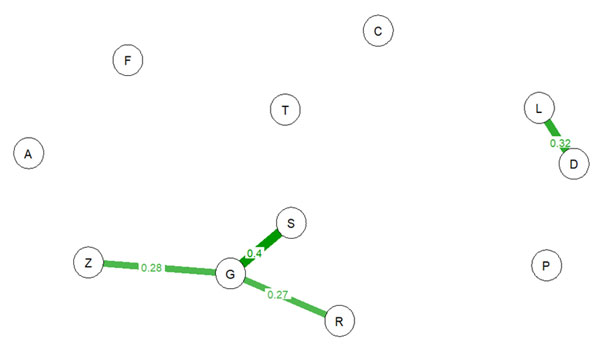
Figure 2. Regularized network of partial correlations between indicators for the entire sample of subjects (hyperparameter γ = 0.05)
To study the influence of cybercommunication addiction on the psychological profile of teenagers in more detail, the sample was divided into two groups, with low and high levels of addiction. This approach allowed us to compare the characteristics of interpersonal relationships and the perception of loneliness depending on the degree of digital involvement.
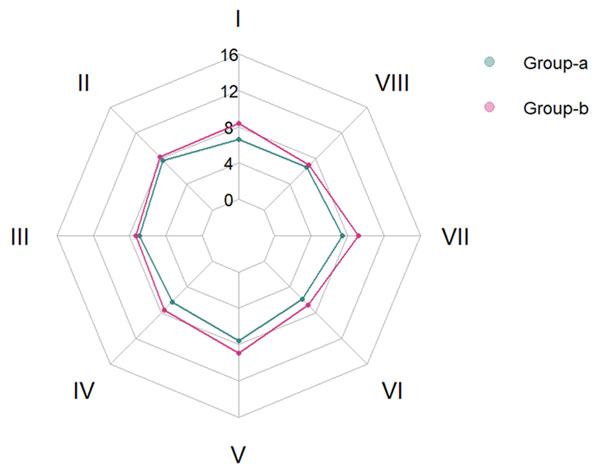
Figure 3. Average values of eight blocks of T. Leary’s test of diagnostics of interpersonal relations for two groups of subjects with low (Group-a) and high (Group-b) cybercommunication dependence
Correlation analysis showed that in the group with a low level of cyber dependence (Group-a), the C indicator is positively associated with friendliness (F), which may indicate that moderate involvement in digital communication is accompanied by the preservation or even strengthening of positive social qualities. In the group with a high level of dependence (Group-b), however, this relationship becomes negative (ρ = - 0.29; p = 0.05), which indicates the opposite trend – an increase in cybercommunication dependence is associated with a decrease in friendliness and, possibly, with emotional closeness and difficulties in building trusting interpersonal relationships.
This conclusion is confirmed by the analysis of the average values of the T. Leary test indicators. Figure 3 illustrates that for all interpersonal relationship scales, the average values are higher in the group with a high level of cyber addiction. This indicates more pronounced behavioral attitudes, both positive and negative, in adolescents deeply involved in the digital environment. Such a picture may reflect both compensatory interaction strategies and features of social maladaptation.
Figures 4 and 5 show the regularized partial correlation networks for groups with low C1 (C < 50) and high C2 (C > 82) values of the C index.
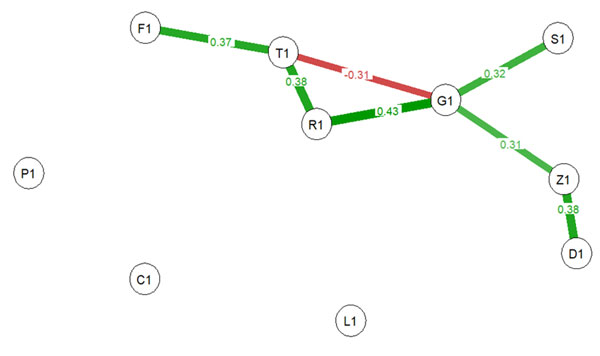
Figure 4. Regularized network of partial correlations between indicators for the subsample of subjects with indicator C < 50 (hyperparameter γ = 0.15)
In the group of subjects with a low level of cybercommunication dependence (C1 < 50), we found a well-organized and relatively dense network of relationships between indicators of interpersonal relations was revealed. A key position in this structure is occupied by the positive partial correlation between authoritarianism and aggressiveness (r = 0.43), which may reflect a communication style focused on control and active influence on the interaction partner.
Interestingly, authoritarianism also shows a significant correlation with altruism (r = 0.38). Although these constructs are often considered opposites, in adolescence such a connection may indicate the presence of a subgroup of teenagers who combine self-confidence and a tendency toward leadership with a willingness to cooperate and provide support. This interpretation is supported by the positive correlation between altruism and friendliness (r = 0.37), suggesting that prosocial attitudes can coexist with a strong personal position in interpersonal interaction.
Aggressiveness, in turn, is positively correlated with selfishness (r = 0.32) and dependence (r = 0.31). This combination may reflect a complex emotional background in adolescents: on the one hand, a focus on personal interests; on the other, a need for support and external approval. These findings may indicate an internal conflict between striving for autonomy and seeking external stability, which is often manifested in tense or impulsive forms of social interaction.
The dependence indicator is also positively correlated with subordination (r = 0.38). This combination points to a pronounced orientation toward external sources of reassurance and a tendency to conform to social expectations. Such a relationship may reflect increased sensitivity to the opinions of others, a need for predictability, and a desire for approval from significant adults or peers. In adolescence, these qualities often emerge as part of the social adaptation process and the formation of self-concept through interaction with the social environment.
Finally, the loneliness (L1) and cyberdependence (C1) indicators in this group are not included in the general network of connections, which indicates their weak influence on the structure of interpersonal relationships in adolescents with minimal involvement in the digital environment.
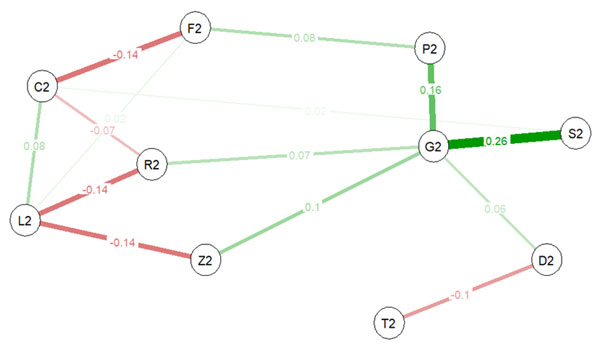
Figure 5. Regularized network of partial correlations between indicators for the subsample of subjects with indicator C > 82 (hyperparameter γ = 0)
A significantly different network configuration is observed among adolescents with a high level of cybercommunication dependence (C2 > 82), as shown in Figure 5. In this group, the cyberdependence indicator demonstrates weak but statistically significant associations with several interpersonal characteristics. In particular, cyberaddiction is negatively correlated with friendliness (r = –0.14) and authoritarianism (r = –0.07), and positively correlated with the subjective experience of loneliness (r = 0.08). These correlations may suggest that adolescents with higher levels of cyberaddiction tend to be less open and friendly in their social interactions, have a lower tendency to dominate, and are more likely to experience social isolation. This pattern may reflect dissatisfaction with real-life social contacts and the use of online communication as a compensatory mechanism.
Aggressiveness in this group retains significant positive correlations with selfishness (r = 0.26) and suspiciousness (r = 0.16). This may suggest a tendency toward interpersonal vigilance and heightened sensitivity to potential threats from others, combined with a strong orientation toward personal interests. Such a behavioral profile may reflect adolescents’ attempts to protect personal boundaries in conditions of social uncertainty, as well as reduced capacity for trust in relationships.
The overall network structure of adolescents with a high level of digital life involvement is less integrated than that of adolescents with a low level of cyberaddiction. In cyberaddicted adolescents, most of the partial correlation coefficients are in the range of 0.06 to 0.26. This indicates the fragmentation of interpersonal relationships, the weakening of prosocial tendencies, and a decrease in the consistency of social orientations.
Thus, the results of the network analysis and the comparison between the two adolescent groups reveal qualitative differences in the organization of interpersonal characteristics depending on the level of cybercommunication dependence. In conditions of low digital engagement, a stable and structured network of interpersonal connections is observed, characterized by moderately strong correlations (r = 0.32–0.43). In contrast, with higher cyberdependence, the structure becomes more fragmented, with predominantly weak associations and a notable decline in positive personal resources.
Discussion
The high level of cybercommunication addiction revealed in the study among more than half of the teenagers in the sample suggests that the average level of digital involvement among young people has increased significantly since the creation of the cybercommunication addiction diagnostic technique proposed by A.V. Toncheva in 2012. Over the past decade, the intensity of the spread of information and communication technologies, as well as the availability of digital devices, have increased significantly. Modern teenagers are immersed in the digital environment from an early age, which forms completely new models of everyday behavior and socialization. The observed shift in the levels of cybercommunication addiction indicates not only the technological evolution of society, but also the need for regular adaptation of diagnostic tools to the changing realities of digitalization.
It is important to emphasize that high involvement in digital technologies among adolescents should not be equated with cybercommunication addiction. In the context of global digitalization of education, professional development, and leisure, active engagement in cyberspace can serve as a form of social adaptation and a necessary response to the changing demands of modern life.
However, our study focuses specifically on cybercommunication addiction — a maladaptive pattern of excessive and compulsive use of digital communication tools, which may disrupt offline interactions and impair the development of meaningful social connections.
From this perspective, a high level of cybercommunication addiction poses potential risks for adolescent socialization, as it may lead to emotional isolation, interpersonal difficulties, and a reduction in prosocial behavior.
Particular attention should be paid to the fact that new technological challenges, including the widespread introduction of artificial intelligence tools, can further increase adolescents' dependence on digital platforms. The virtual environment is increasingly becoming a space not only for communication, but also for learning, entertainment, and self-identification. This requires the scientific community and practitioners to develop strategies for psychological support for adolescents aimed at developing their digital self-control skills, critical attitudes toward content, and support for sustainable offline connections.
The formation of the subjective position of the individual becomes critically important for autonomous and responsible interaction with digital reality. Independence, criticality, and reflexivity form personal stability and reduce the risks of dependence and social atomization (Persiyantseva, 2016, 2020). Constructivist approaches based on the ideas of cybernetics emphasize the active role of the subject in the construction of knowledge and social reality (Knyazeva, 2024). A teenager in this context is not a consumer of content, but a constructor of identity and social connections.
Prevention of the risks of digital socialization requires the introduction of interactive educational formats. In particular, edutainment, which combines learning and play, promotes the development of communicative competence, empathy, and productive interaction skills (Persiyantseva, 2007). These forms strengthen social integration and develop emotional-regulatory and reflexive abilities necessary for adaptation in the digital world.
Thus, the influence of the digital environment on the mental and social development of adolescents is multifactorial. Loneliness, Internet addiction, and a weak subjective position increase vulnerability to the risks of virtual space.
Thus, the development of comprehensive educational and psychological programs aimed at developing independence, critical thinking, and sustainable offline communications is relevant. Psychological support for adolescents should take into account the specifics of their digital experience, the level of reflexivity, and the characteristics of social skills as predictors of resistance to the risks of the digital environment. It is necessary to adapt educational and preventive programs in Russia to the national characteristics of socialization in the digital environment.
Conclusion
The results allow us to conclude that high cybercommunication addiction is closely related to the psychological state of adolescents and the specifics of their interpersonal relationships. In particular, we found that with increasing addiction, the subjective feeling of loneliness increases, and qualitative changes in the structure of social connections occur. A decrease in friendliness recorded in adolescents with severe cyberdependence can be interpreted as an indicator of social isolation and emotional withdrawal caused by a preference for virtual forms of interaction. This is consistent with the results of foreign studies that record a link between the active use of social networks and an increase in social anxiety, depression, and loneliness (Kuss & Griffiths, 2017; Wu et al., 2024).
In addition, the data show that loneliness in cyberdependent teenagers is associated with a decrease in authoritarianism and their need to depend on the opinions of others. This may indicate that virtual communication neutralizes the need for social leadership and reduces the importance of real social hierarchies. However, this trend is not observed in teenagers with a low level of cyberdependence, whose structure of interpersonal relationships remains more balanced and socially adaptive. It can be concluded that a high degree of cyberdependence is associated not only with a change in the social preferences of teenagers, but also with a restructuring of their interpersonal strategies towards social isolation, emotional alienation, and increased aggressiveness.
The results obtained in the study allow us to state that over the past ten years, in the context of the rapid development of the information and communication society, there has been a significant increase in the level of cybercommunication addiction among the younger generation. This phenomenon should be considered as an inevitable consequence of global socio-cultural transformations associated with the digitalization of everyday life, including educational, professional, and leisure spheres. The high level of involvement of adolescents in cybercommunications is a form of adaptation to changed social realities, in which possession of digital tools and skills of virtual interaction becomes a prerequisite for successful socialization.
However, along with the expansion of opportunities for remote communication and access to a variety of social and educational resources, the increasing mediation of human interactions through digital media gives rise to a number of negative consequences. First of all, we are talking about the formation of stable states of loneliness, emotional isolation, and a decrease in the quality of interpersonal relationships. The analysis showed that the strengthening of cybercommunication dependence is associated with an increase in subjective feelings of loneliness, and the combined effect of these factors transforms the nature of interpersonal relationships among adolescents.
In particular, we found that as digital dependence increases, there is a decrease in friendliness in adolescents' behavior, which can be interpreted as a manifestation of emotional alienation and a reduction in empathic reactions in live communication. At the same time, an increase in subjective loneliness is associated with a decrease in authoritarianism and a decrease in the severity of the need for social approval and dependence on the opinions of others. Such dynamics may indicate both a decrease in the desire for social control and dominance, and an increase in personal isolation and self-isolation in the context of virtual interaction.
It should be emphasized that the identified features of psychological functioning of adolescents in the conditions of cyberdependence have both potentially adaptive and risk-producing aspects. On the one hand, a decrease in dependence on external social evaluation can contribute to the formation of greater personal autonomy and self-sufficiency. On the other, a decrease in friendliness and a decrease in the desire for direct interpersonal interaction can strengthen the tendencies towards social disintegration and emotional vulnerability.
Although the effects found in this study are still moderate, they set an important vector for further scientific research and applied interventions. As one of the areas of prevention of negative consequences of cybercommunication addiction, it is advisable to consider the targeted development of emotional intelligence competencies, self-regulation skills, and stress resistance in adolescents. Not only the educational space, but also the family should play a significant role in this process, since it is the family that provides the primary resource of emotional support and security.
In addition, the task of preserving and stimulating live, direct communication, which helps to compensate for the risks of emotional isolation and promotes the development of social skills, which are critically needed in the context of the increasing virtualization of interactions, is of particular importance. In this context, it is necessary to develop comprehensive programs for psychological support of adolescents that integrate communicative competence training, the development of reflexive skills, and the formation of sustainable behavioral strategies in the context of a hybrid social reality that combines both digital and offline communications.
The data obtained highlight the need to develop preventive and corrective programs aimed at maintaining and developing positive social competencies in adolescents, while simultaneously addressing the risks associated with their immersion in the digital environment.
Limitations
To increase the validity of the findings, it is advisable to expand the sample by including adolescents from various educational institutions. This will allow us to check the stability of the results obtained and minimize the influence of the social specificity of individual groups. Expanding the sample will provide a more in-depth analysis of the relationships between cyber addiction, loneliness, and other psychological characteristics that manifest themselves in interpersonal communication, both offline and online.
Ethics Statement
Written informed consent to participate in this study was provided by the parents of all students. Parents and teachers received recommendations on the current situation of the children’s development.
Author Contributions
Research and experiments were carried out by S.V. Persiyantseva. S.L. Artemenkov conducted a mathematical analysis of the data. The authors discussed the results of the study and collaborated on the manuscript.
Conflict of Interest
The authors declare no conflict of interest.
Acknowledgements
The authors express their gratitude to the parents, teachers, children, and colleagues from the Federal Scientific Center for Psychological and Multidisciplinary Research (FSC PMR) and Moscow State University of Psychology and Education (MSUPE) for their assistance in conducting the study. Special thanks are extended to the staff of the Moscow school for their support in organizing data collection.
References
Artemenkov, S.L. (2020). Problema sredstv oposerediya v sovremennom obuchenii i effekt pertseptivno-semanticheskoi slepoty [The problem of means of mediation in modern education and the effect of perceptual-semantic blindness]. In Nauchnaya shkola V.V. Davydova: traditsii i innovatsii [Scientific school of V.V. Davydov: Traditions and innovations] (pp. 56–58). MGPPU
Artemenkov, S.L. (2021a). The effect of perceptual-semantic blindness in solving semantic problems with visual means containing the solution. Journal of Educational and Psychological Research, 3(1), 207–211. https://doi.org/10.33140/JEPR.03.01.01
Artemenkov, S.L. (2021b). Problema oposerediya v kiberpsikhologii [The problem of mediation in cyberpsychology]. In Neirokompyutery i ikh primenenie. XIX Vserossiiskaia nauchnaia konferentsiia [Neurocomputers and their applications. XIX All-Russian Scientific Conference] (pp. 391–395).
Artemenkov, S.L. (2021c). Uporiadochennye seti chastnykh korreliatsii v psikhologicheskikh issledovaniiakh [Ordered partial correlation networks in psychological research]. Modelirovanie i Analiz Dannykh [Modelling and Data analysis], 11(2), 31–50. https://doi.org/10.17759/mda.2021110202
Artemenkov, S.L. (2021d). Problemy postroeniia i analiza uporiadochennykh setei chastnykh korreliatsiĭ v psikhologicheskikh issledovaniiakh [The issues of construction and analysis of ordered partial correlation networks in psychological research]. Modelirovanie i Analiz Dannykh [Modelling and Data Analysis], 11(3), 36–56. https://doi.org/10.17759/mda.2021110303
Attrill-Smith, A., Fullwood, C., Keep, M., & Daria, D. J. (Eds.) (2018). The Oxford Handbook of Cyberpsychology. Oxford University Press. https://doi.org/10.1093/oxfordhb/9780198812746.001.0001
Błachnio, A., Przepiorka, A., Boruch, W., & Bałakier, E. (2016). Self-presentation styles, privacy, and loneliness as predictors of Facebook use in young people. Personality and Individual Differences, 94, 26–31. https://doi.org/10.1016/j.paid.2015.12.051
Bochaver, V.A. (2019). Psikhologiya internet-zavisimosti: vyzovy i riski [Psychology of internet addiction: Challenges and risks]. Psikhologicheskii zhurnal [Psychological journal], 5, 1–12.
Cacioppo, J.T., Fowler, J.H., & Christakis, N.A. (2009). Alone in the crowd: The structure and spread of loneliness in a large social network. Journal of Personality and Social Psychology, 97(6), 977–991. https://doi.org/10.1037/a0016076
Chen, Y., Liu, X., Chiu, D. T., Li, Y., Mi, B., Zhang, Y., & Yan, H. (2022). Problematic social media use and depressive outcomes among college students in China: Observational and experimental findings. International Journal of Environmental Research and Public Health, 19(9), 4937. https://doi.org/10.3390/ijerph19094937
Daraj, L. R., AlGhareeb, M., Almutawa, Y. M., Trabelsi, K., & Jahrami, H. (2023). Systematic review and meta-analysis of the correlation coefficients between nomophobia and anxiety, smartphone addiction, and insomnia symptoms. Healthcare, 11(14), 2066. https://doi.org/10.3390/healthcare11142066
Devi, K. A., & Singh, S. K. (2023). The hazards of excessive screen time: Impacts on physical health, mental health, and overall well-being. Journal of Education and Health Promotion, 12, 413. https://doi.org/10.4103/jehp.jehp_447_23
Dickey, M. (2004). The impact of web-logs (blogs) on student perceptions of isolation and alienation in a web-based distance-learning environment. Open Learning, 19(3), 279–291. https://doi.org/10.1080/0268051042000280138
Ding, H., Cao, B., & Sun, Q. (2023). The association between problematic internet use and social anxiety within adolescents and young adults: A systematic review and meta-analysis. Frontiers in Public Health, 11, 75723. https://doi.org/10.3389/fpubh.2023.1275723
Godard, R., & Holtzman, S. (2024). Are active and passive social media use related to mental health, wellbeing, and social support outcomes? A meta-analysis of 141 studies. Journal of Computer-Mediated Communication, 29(1). https://doi.org/10.1093/jcmc/zmad055
Gonzalez-Bueso, V., Santamaria, J.J., Fernandez, D., Merino, L., Montero, E., & Ribas, J. (2018). Association between internet gaming disorder or pathological video-game use and comorbid psychopathology: A comprehensive review. International Journal of Environmental Research and Public Health, 15(4), 668. https://doi.org/10.3390/ijerph15040668
Hussain Z., Wegmann E., Yang H., & Montag C. (2020). Social networks use disorder and associations with depression and anxiety symptoms: А systematic review of recent research in China. Frontiers in Psychology, 11, 211. https://doi.org/10.3389/fpsyg.2020.00211
Jiaxin, Y., Xi, F., Xiaoli, L., & Yamin, L. (2020). Association of problematic smartphone use with poor sleep quality, depression, and anxiety: A systematic review and meta-analysis. Psychiatry Research, 284, 112686. https://doi.org/10.1016/j.psychres.2019.112686
Keles, B., McCrae, N., & Grealish, A. (2019). A systematic review: The influence of social media on depression, anxiety and psychological distress in adolescents. International Journal of Adolescence and Youth, 25(1), 79–93. https://doi.org/10.1080/02673843.2019.1590851
Knyazeva, E.N. (2024). Istoricheskie korni teorii konstruktivizma v kibernetike [Historical roots of constructivism theory in cybernetics]. In Nauka, tekhnologii i tsennosti v neustoichivom mire.IV Kongress Russkogo obshchestva istorii i filosofii nauki [Science, technology and values in an unstable world: IV Congress of the Russian Society for the History and Philosophy of Science] (pp. 78–81).
Kuss, D.J., & Griffiths, M.D. (2017). Social networking sites and addiction: Ten lessons learned. International Journal of Environmental Research and Public Health, 14(3), 311. https://doi.org/10.3390/ijerph14030311
Leary, T. (1957). Interpersonal diagnosis of personality: A functional theory and methodology for personality evaluation. New York: John Wiley & Sons, 59–90.
Ma J. (2022). A Meta-Analysis of Social Media Usage with Stress, Anxiety, and Depression. In Proceedings of the 2021 International Conference on Intelligent Medicine and Health (pp. 125–129). https://doi.org/10.1145/3484377.3487041
Marttila, E., Koivula, A., & Räsänen, P. (2021). Does excessive social media use decrease subjective well-being? A longitudinal analysis of the relationship between problematic use, loneliness and life satisfaction. Telematics and Informatics, 59, 101556. https://doi.org/10.1016/j.tele.2020.101556
Morahan-Martin, J., & Schumacher, P. (2000). Incidence and correlates of pathological internet use among college students. Computers in Human Behavior, 16(1), 13–29. https://doi.org/10.1016/S0747-5632(99)00049-7
Morahan-Martin, J., & Schumacher, P. (2003). Loneliness and social uses of the Internet. Computers in Human Behavior, 19(6), 659–671. https://doi.org/10.1016/S0747-5632(03)00040-2
Nowland, R., Necka, E. A., & Cacioppo, J. T. (2018). Loneliness and social internet use: Pathways to reconnection in a digital world? Perspectives on Psychological Science, 13(1), 70–87. https://doi.org/10.1177/1745691617713052
O'Day, E.B., & Heimberg, R.G. (2021). Social media use, social anxiety, and loneliness: A systematic review. Computers in Human Behavior Reports, 3, 100070. https://doi.org/10.1016/j.chbr.2021.100070
Perezhogin, L.O., Shalimov, V.F., & Kazakovtsev, B.A. (2018). Zavisimost’ ot personal’nogo kompyutera, interneta i mobil’nykh ustroistv, obespechivayushchikh udalenyi setevoy dostup (klinika, diagnostika, lechenie) [Dependence on personal computers, the Internet, and mobile devices providing remote network access (clinic, diagnostics, treatment)]. Rossiiskii Psikhiatricheskii Zhurnal [Russian Psychiatric Journal], 2, 19–30.
Persiyantseva, S.V. (2007). Shkol’nye igry – sposob uluchsheniya adaptatsii k uchebnoi deyatel’nosti [School games as a way to improve adaptation to learning activities]. Psikhologiya i Shkola [Psychology and School], 4, 49–72.
Persiyantseva, S.V. (2016). Strukturnaya model’ kontseptsii pozitsii sub’ekta ucheniya [Structural model of the concept of the position of the learning subject]. Psikhologiya. Istoriko-Kriticheskie Obzory i Sovremennye Issledovaniya [Psychology. Historical-Critical Reviews and Contemporary Research], 5(6A), 236–246.
Persiyantseva, S.V. (2020). Svyaz’ pozitsii sub’ekta ucheniya i samostoyatel’nosti kak lichnostnogo kachestva [The relationship between the learning subject position and independence as a personal quality]. In E.D. Bozhovich (Ed.), Lichnostnye faktory razvitiya pozitsii sub’ekta ucheniya [Personal factors of the development of the learning subject’s position] (pp. 229–254). Nestor-Istoriya.
Piteo E.M., & Ward K. (2020). Social networking sites and associations with depressive and anxiety symptoms in children and adolescents – a systematic review. Child and Adolescent Mental Health, 25(4), 201–216. https://doi.org/10.1111/camh.12373
Ran, G., Li, J., Zhang, Q., & Niu, X. (2022). The association between social anxiety and mobile phone addiction: A three-level meta-analysis. Computers in Human Behavior, 130, 107198. https://doi.org/10.1016/j.chb.2022.107198
Rubtsova, O.V. (2019). Tsifrovye tekhnologii kak novoe sredstvo oposerediya (Chast’ pervaya) [Digital Media as a New Means of Mediation (Part one)]. Kul’turno-Istoricheskaya Psikhologiya [Cultural-historical Psychology], 15(3), 117–124. https://doi.org/10.17759/chp.2019150312
Russell, D., Peplau, L.A., & Ferguson, M.L. (1978). Developing a measure of loneliness. Journal of Personality Assessment, 42(3), 290–294. https://doi.org/10.1207/s15327752jpa4203_11
Skinner, B.F. (1953). Science and Human Behavior. New York: Macmillan.
Sobchik, L.N. (1990). Metody psikhologicheskoy diagnostiki. Vyp. 3. Diagnostika mezhlichnostnykh otnosheniy. Modifitsirovannyy variant interpersonal'noy diagnostiki T. Liri. Metodicheskoe rukovodstvo [Methods of psychological diagnostics. Issue 3. Diagnosis of interpersonal relations. Modified version of T. Leary’s interpersonal diagnosis. Methodological manual]. Moscow, 1-46.
Soldatova, G.U., & Rasskazova, E.I. (2023). Tsifrovaya sotsializatsiya rossiiskikh podrostkov: skvoz’ prizmu sravneniya s podrostkami 18 evropeiskikh stran [Digital socialization of Russian adolescents: Through the prism of comparison with adolescents from 18 European countries]. Sotsial’naya Ppsikhologiya i Obshchestvo [Social psychology and society], 14(3), 11–30. https://doi.org/10.17759/sps.2023140302
Soriano-Molina, E., Liminana-Gras, R.M., Patro-Hernandez, R.M., & Rubio-Aparicio, M. (2025). The association between internet addiction and adolescents’ mental health: A meta-analytic review. Behavioral Sciences, 15(2), 116. https://doi.org/10.3390/bs15020116
Toncheva, A.V. (2012). Diagnostika kiberkommunikativnoy zavisimosti [Diagnosis of cybercommunication dependence]. Naukovedenie, 4(13), 138.
Vahedi, Z., & Saiphoo, A. (2018). The association between smartphone use, stress, and anxiety: A meta-analytic review. Stress and Health, 34(3), 347–358. https://doi.org/10.1002/smi.2805
Vodopyanova, N.E. (2009). Psikhodiagnostika stressa [Psychodiagnostics of stress]. Saint Petersburg: Piter, 184–186.
Woods, H. C., & Scott, H. (2016). #Sleepyteens: Social media use in adolescence is associated with poor sleep quality, anxiety, depression and low self-esteem. Journal of Adolescence, 51, 41–49. https://doi.org/10.1016/j.adolescence.2016.05.008
Wu, P., Feng, R., & Zhang, J. (2024). The relationship between loneliness and problematic social media usage in Chinese university students: A longitudinal study. BMC Psychology, 12(1), 13. https://doi.org/10.1186/s40359-023-01498-4